
Authors, Page 5
- W E Vine
- August Van Ryn
- William Trotter
- Samuel Tylor
- Husdson Tylor
- C E Stuart
- John Walden
- T Ernest Willson
- W T P Wolston
- CHM, (new recordings)
- Matt Perman
- John Piper
- William Kelly (New Recordings)
- G C Willis
- W C Turner
- H H Snell
- F B Hole
- Carl Knott
- Graham Scroggie
- Irving Risch
W E Vine
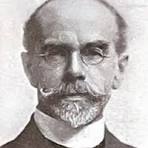
What kind of man would write an “Expository Dictionary of New Testament Words”? Would he spend his existence cloistered away in an ivory tower, surrounded by heaps of books, and seldom, if ever, descend to the streets below? Perhaps we imagine that there is a hidden community of such people, and they are the ones who give us those cumbersome bookends called lexicons, concordances, encyclopedias and dictionaries.
No doubt there are many authors who appear so detached. They approach the Word of God in a purely academic and theoretical manner. Indeed, it is rare to find Christian scholars who have not fallen into the snare of stale, sterile intellectualism. But William Edwy Vine (1873-1949) was not one of them. To him, becoming a theoretical Christian, and not a practical one, was a dreaded fate.
Upbringing and Family Life
Through the teaching of his godly father and mother, he was converted in early boyhood, and at the age of fourteen, he was baptized and received into fellowship with the assembly meeting in Fore Street, Exeter, England.
W. E. Vine’s father had a boarding school called Mount Radford School, in a suburb of Exeter. At the age of seventeen William became a teacher in his father’s school, at the same time pursuing an education at University College of Wales at Aberystwyth, and later at London University. Those years were part of a golden era in English scholarship that have never been surpassed. Academic giants roamed the land, strict mental disciplines were enforced, and keen minds stretched.
In 1899, he married Miss Phoebe Baxendale, who kept pace with this versatile worker for fifty years. In the mercy of God, they lived to celebrate their golden wedding anniversary about three months before he passed away. They raised five children.
Vine had a schoolmaster’s air about him. But at home his children saw a man of wit and whimsy who delighted to burrow ingenious tunnels for his children’s sand castles, or to construct a tower of building blocks that reached to the ceiling of the nursery. His children testified that he could be stern at times, but never harsh. Vine left his evenings for his family and would often play the piano and sing children’s songs in his mellow, tenor voice. And when the house was full of visitors, Vine would entertain the young people with a violin or piano and have them laughing so hard they would cry.
Vine was a short, athletic man. He felt that getting regular, fresh air and exercise was part of his Christian stewardship. A powerful swimmer, he once rescued his son Edwin and two other boys in a choppy sea. Every year they would vacation at the seaside, swimming, rowing and sailing with the family.
Spiritual Habits
Early rising and regularity in Bible reading and study were hallmarks of W. E. Vine’s life. That should not surprise anyone who has read his work. But the fact that Vine could go in for a subjective and even mystical approach to the Word of God is unique. Cautious Bible students often disparage the subjective. But Vine could see that God can, and often does, guide His servants in a very personal way. “The meek will He guide in judgment: and the meek will He teach His way” ( Ps. 25:9 ). One example of this was in 1909. Mr. Vine was waiting on God for guidance about leaving the school where he taught with his brother Theodore and going to Bath to take responsibilities with the missionary magazine, Echoes of Service. He had an appointment at Cardiff, and on the Saturday morning while in prayer, with the Bible open before him at Deuteronomy 31 for his daily reading, he was confronted with verse 7: “Thou must go with this people.” He was so struck with these words that he underlined them in his Bible. At the same time, his brother was to preach at Crediton on the Sunday. After being shown into his room, with his mind on his brother’s moving to Bath, he decided to kneel in prayer before going downstairs. After rising from his knees, his eyes met a combination of texts on the wall: “I was left . . . With good will doing service as unto the Lord” ( Isa. 49:21 ; Eph. 6:7 ).
When Mr. Vine went to the school at Exeter on the morning after his return home, his brother greeted him with the remark, “I’m afraid you are going to leave me.” Asked why, he told him about the texts he had seen on the wall. Mr. Vine then remarked how extraordinary it was that such texts should have confronted his brother, for he himself had been given the text that same day, “Thou must go with this people.” Vine later related that through a series of seven small but connected circumstances, God definitely led him to take on the responsibilities at Echoes of Service.
Missionary Statesman
It was in December, 1909, that Mr. Vine was asked by W. H. Bennet and R. E. Sparks of Echoes of Services, to join in the work at Bath. Echoes of Service is a monthly record of missionary efforts by laborers from the British Isles. The editors not only corresponded with hundreds of missionaries but also channeled funds from their home congregations. Vine handled as many as sixty to seventy letters a day, many of them he personally answered, or dictated to his secretary. It was one of his remarkable characteristics that from early rising in the morning until late retirement at night he would fill every moment of his day with varied activities. During this time, he became a counselor and confidant to scores of workers who faced grave perplexities. Vine continued this work until his homecall in 1949.
Literary Contributions
Mr. Vine was constantly preaching the Gospel and teaching the Scriptures. Around the year 1905, Mr. C. F. Hogg teamed up with Mr. Vine to conduct a correspondence course of Bible study. These studies in 1 Thessalonians and then in Galatians moved W. E. Vine into a wider sphere of influence. Thereafter his writing ministry expanded. His collected writings fill five large volumes (published by Gospel Tract Publishers of Glasgow). But surely his greatest contribution to the Church of God was his Expository Dictionary of New Testament Words. W. E. Vine has put all English-speaking Bible students in his debt. The English reader with little or no knowledge of Greek has, of course, concordances and lexicons. These provide a skeleton: Vine clothes it with the flesh and sinews of living exposition, and in so doing makes available for the ordinary reader the expert knowledge contained in the more advanced works. In a preface to the dictionary, W. E. Vine wrote: “In any work in which we engage as servants of Christ, His word ever applies, ‘When ye shall have done all those things that are commanded you, say, We are unprofitable servants; we have done that which was our duty to do’ ( Luke 17:10 ). So with the reminders given by the Apostle Paul, ‘it is required in stewards, that a man be found faithful . . . and what hast thou that thou didst not receive?’ ( 1 Cor. 4:2 , 7 ). We ever have reason for humbling ourselves before God, for none of us knows yet as he ought to know, and at the Judgment Seat of Christ ‘the fire itself shall prove each man’s work of what sort it is’ ( 1 Cor. 3:13 ).”

August Van Ryn
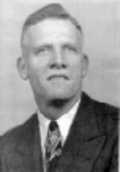
August VanRyn
One of the most memorable personalities among Brethren workers in the early and middle years of the 20th century was August Van Ryn. August was the eighth of twelve children born to the Dutch family of Van Ryn senior. At the age of seventeen, August left the Netherlands for the United States. Two brothers and a sister had preceded him by this time. August was never to see his mother again this side of heaven. After three years of ministry in Albany, New York, August joined his brothers and sister in Grand Rapids, Michigan. At this time he did attend meetings, but was unmoved by the Gospel. Then on Sunday, May 1st 1910, August was led to the Lord by his brother Louis.
August soon became involved in open air preaching. Approximately two years later, he was asked to minister at the Sunday evening service. His message was brief, and needed to be finished by his brother. After this start, the following two years were spent in gaining solid experience in preaching the Word. Next he was invited to assist with the ministry in a tent campaign held by a “seasoned preacher.” August related how God seemed to delight in using “those of us who feel they are not fit.”
Soon thereafter he quit his secular employment and began a sixty five year “plus” career of preaching the gospel and teaching the principles of the Christian faith. On the last day of 1916 after being invited, August left the states for Nassau, Bahamas. There he met the lady who was later to become his bride, Ms. Persis Roberts. Persis was the sister-in-law of Bob Stratton, whom had previously come from New Jersey to the Bahamas to preach the gospel. It was love at first sight for August and Persis. A few months later they were married, and made their home in March Harbor.
In October 1926, a tidal wave was to destroy their home, and very nearly took their lives. A baby girl was lost but three children survived, Elliot, Lorraine and Belle. A year later the Lord gave them a baby boy named Carroll. In 1930, after living in the islands for thirteen years, the Van Ryn family moved to Grand Rapids, Michigan. For the next three and one-half years August itinerated among the assemblies. In 1933 they moved once again, this time to Florida where they spent the rest of their lives.
An autobiography by August Van Ryn has been written, and is entitled “Sixty Years In His Service.” The man and his wonderful ministry were both a tribute to his God and King.


William Trotter

Samuel Tylor
No information available, but he is with the Brethren.

Hudson Tylor
Taylor, James Hudson (1832-1905)
Founder and director of the China Inland Mission (CIM)
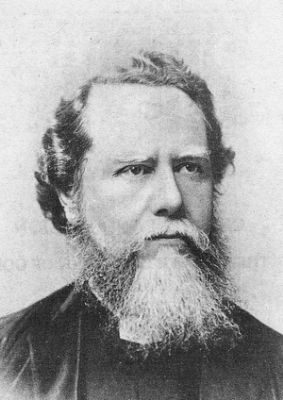
Born at Barnsley, Yorkshire, England, Hudson Taylor sensed by the time he was 17 that God was calling him to China. He prepared himself by reading books on China, analyzing the Chinese Gospel of Luke, and studying medicine. Four years of his first term of service (1853-1860) in southeast China was under a Chinese evangelization society, founded under the inspiration of Karl Gützlaff. In 1858 in Ningpo (Ningbo) he married Maria Dyer, who was a faithful helpmate until her death in 1870.
Although forced to return to England in 1860 because of poor health, Taylor had a continuing concern for the millions of Chinese living in provinces where no missionary had every gone. In 1865 he summed up his growing vision in China’s Spiritual Need and Claims. The same year, with great faith but limited financial resources, he founded the China Inland Mission. Its goal was to present the gospel to all the provinces of China. Beginning in 1866 with a group of twenty-two missionaries, including the Taylors, the mission grew rapidly in numbers and outreach. By the time of Taylor’s death in 1905, the CIM was an international body with 825 missionaries living in all eighteen provinces of China, more than 300 stations of work, more than 500 local Chinese helpers, and 25,000 Christian converts. Taylor stamped his own philosophy of life and work on the CIM: sole dependence on God financially, with no guaranteed salary; close identification with the Chinese in their way of life; administration based in China itself rather than in Great Britain; an evangelical, nondenominational faith; and an emphasis upon diffusing the gospel as widely as possible through all of China. The last led him to encourage single women to live in the interior of China, a step widely criticized by other mission societies.
With heavy administrative responsibilities, Taylor spent as much time out of China as in, traveling to many countries to make China’s needs known and to recruit new missionaries. Although often absent from China, Taylor kept in close touch with his many missionaries, and where possible, continued to engage in missionary activity. He played a prominent part at the General Missionary Conferences in Shanghai in 1877 and 1890. He retired from administration 1901, died in Changsha, Hunan, in 1905, and was buried in Chen-chiang (Zhenjiang), Kiangsu (Jiangsu).
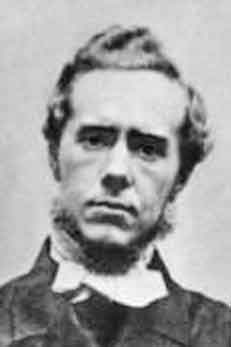
Ralph R. Covell, “Taylor, James Hudson,” in Biographical Dictionary of Christian Missions, ed. Gerald H. Anderson (New York: Macmillan Reference USA, 1998), 657-658.

C E Stuart
Chief Men Among the Brethren Biography
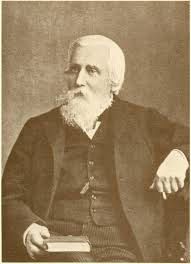
CLARENCE ESME STUART was the youngest son of Mr. Wm. Stuart, of Tempsford Hall, Sandy, and grandson of Hon. Wm. Stuart, Archbishop of Armagh, who, like that prelate’s father, enjoyed the special confidence of King George III. The Earl of Bute was direct ancestor, likewise of the present Marquis of Bute. The family descends collaterally from the old royal house of Stuart, and C. E. Stuart was by some regarded as bearing a likeness to Charles I. His mother was a maid-of-honour to Queen Adelaide as Duchess of Clarence, who was his godmother; hence the name Clarence. The name Esme is one familiar to students of modern Scottish history.
Clarence Stuart was born in 1828 and was educated at Eton, from which he proceeded to St. John’s College, Cambridge, in accordance with the custom of his family. Here he took his degree of M.A., after gaining one of the earliest of the Tyrwhitt University Scholarships in Hebrew. For sacred study he had early conceived a special taste; the more so as, under the fostering care of a Christian mother, C. E. Stuart in his youth experienced the spiritual change by which we pass “from death unto life” (John 5. 24). He would, doubtless, in due course, have taken Orders in the Church of England, to which his family belonged, but a defect in his speech seems to have occasioned his remaining what is termed a layman.
Mr. Stuart, marrying a daughter of Colonel Cunninghame, of Ayrshire, settled in Reading, where for several years he interested himself in Church work of the Evangelical type, that with which his family was traditionally identified. Amongst other forms of activity, Mr. Stuart at this period of his life promoted the operations of the British and Foreign Bible Society.
About the year 1860 Mr. Stuart’s attention was called to the position taken by those Christians commonly called “Plymouth Brethren” (though they have consistently rejected any such title), represented in Reading by a large “gathering,” amidst which ministered the late Wm. Henry Dorman, a former Congregational minister, whose connection with the “brethren” dated from about the year 1840. In the years 1845-1848 Mr. Dorman figured as a trusted ally of the late John Nelson Darby in the formation of what has since been denominated the “Exclusive” section of brethren, the continued unhappy effect of which his eldest son, Mr. W. H. Dorman, of Stafford, endeavoured to some extent to remedy. Mr. Stuart became convinced, under the late Mr. Dorman’s influence, of the untenable character of his own churchmanship, and without more ado took his place, as the expression was, in the Reading fellowship, which for years was identified especially with his own name.
During the years 1864-1866, Mr. Stuart’s fidelity to “J.N.D.,” like that of others, was tested by Mr. Dorman’s uncompromising opposition to Mr. Darby’s teaching with reference to a class of sufferings of our Lord, discriminated as “non-atoning,” as derived from His association with Israel. This doctrine “W.H.D.” put on the same plane as that of B. W. Newton, which brought about the split in 1848. The close acquaintance, however, of C. E. Stuart with the usage of Hebrew words which came into play for any Biblical scholar having to consider such a question, aided him in determining the direction of his own sympathies in the matter. He did not follow the example of his Reading associate, who then seceded from the Darby fellowship.
In 1881, when “J.N.D.” lent himself to another unsettlement among brethren, Mr. Stuart again stood with him; and in the next year, when that remarkable man passed away, the hearty voice of “C. E. S.” was one raised over his interment. For three years longer Mr. Stuart remained in the company of those who had owned the special leadership of “J.N.D.”
In 1885 a storm arose over some of his own views which then acquired prominence. These were deemed by many inconsistent with the traditional teaching of brethren, especially as regards the standing of the Children of God. In a further cleavage, which searched many hearts, some rallied to “C. E. S.,” and accepted his view as a distinct advance in truth, whilst others, not prepared to commit themselves definitely to it, held that the difference of judgment manifested from this time afforded no sufficient reason for severance from “C.E.S.”
The eighteen years from then till his death proved full of activity for his pen. In addition to independent books and papers issued by him, Mr. Stuart was a constant contributor to a periodical entitled “Words in Season.” His earlier writings comprised a book on the Sacrifices, “Simple Papers on the Church of God,” an article on “The Atonement, as set forth in the Old Testament,” his “Textual Criticism of the New Testament, for English Readers,” and a “Review of Robertson Smith’s Lectures on the Old Testament in the Jewish Church,” a paper the value of which was acknowledged by many English clergymen. In textual criticism Mr. Stuart was an adherent of the school of Tregelles rather than that of Scrivener.
Publications belonging to the two last decades of his career commenced with a pamphlet on “Christian Standing and Condition,” which called forth much acrimonious discussion, culminating in a division. This, and cognate pamphlets were followed by a series of papers on Propitiation. From long familiarity with the scheme of Old Testament types, Mr. Stuart insisted upon the detailed fulfilment of the presentation of the blood of the Antitype after death, as the propitiation par excellence, against the current view that the Cross covers the whole ground of the atoning work. The line thus taken by him, although supported by several expositors, including R. Govett, tended to accentuate the difference existing between him and his old associates, who held, with such writers as Ellicott, that the Old Testament should bend to the New, and not vice versa. Then came a series of devotional expositions of the Gospels of Mark, Luke, and John, the Acts of the Apostles, the Epistles to the Romans and Hebrews, and the Book of Psalms, the spiritual value of the latter being acknowledged by Professor Cheyne.
Amongst the latest of his writings was a pamphlet entitled “The Critics: Shall We Follow Them?” In this case “C.E.S.” did battle for traditional views of the Old Testament against the Higher Critics. Nevertheless, he kept abreast of the most recent scholarship, valuing, for example, Professor Driver’s “Treatise on the Hebrew Tenses.” His library contained all the standard works used by modern Biblical scholars, with some rare specimens from the past, including a valuable copy of the Complutensian Polyglot, which in his old age he presented to the library of his college.
As an interpreter, Mr. Stuart must be ranked with those who adhere closely to the wording of the text of Scripture, and to belief in verbal inspiration. He heeded little extraneous sources, such as Patristic interpretation; least of. all the suggestions of “modern thought.” With independent judgment he held firmly the general body of “recovered” truth, ecclesiastical and prophetic, characteristic of “brethren.
Simple in his demeanour, with much charm of manner, he endeared himself to the poor of the flock, to whom he was “good.” He delighted to share with them the light which he enjoyed. C. E. Stuart must be reckoned with those of whom it may be said that, although dead, they
yet speak.
E.E.W.

John Walden
John Walden was amoung the brethren and was also connected with Gospel Folio Press. I cannot find any information on the Internet. Go this from Keith Gull on Facbook: John Walden was in Colorado Springs in the late 60s. My Dad liked a daughter of his in the early 50s.

T Ernest Willson
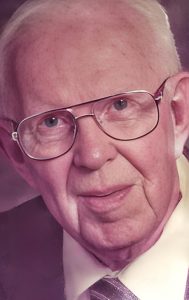
Born into a Christian home in Belfast, N. Ireland, Ernest Wilson left work at age 21 in the world’s largest shipyard to venture into the heart of Africa with the gospel. This volume tells of the forty years spent in his beloved Angola. Forced to leave in 1961, he continued his Bible teaching ministry throughout the United States and around the world for the next thirty-five years before going home to be with the Lord in 1996.
His autobiography, Angola Beloved, first published in 1967, still challenges believers today to live a life of faith. From boyhood, his imagination was fired by reading about David Livingston, Fred Arnot, and Mary Slessor. He wanted to follow in their footsteps, see the places they had pioneered.

W T P Wolston

Charles Henry Macintosh
I have some old and new recording of CHM’s works. Here are the link to both. NEW =111,
OLD = Short Papers Section 10 by CHM 22
Short Papers Section 9 by CHM 21
Short Papers Section 8 by CHM 15
Short Papers Section 7 by CHM 8
Short Papers Section 6 by CHM 10
Short Papers Section 5 by CHM 12
Short Papers Section 4 by CHM 12
Short Papers Section 3 by CHM 12
Short Papers Section 2 by CHM 9
Short Papers Section 1 by CHM 13
Miscellaneous Writings of CHM Book 7 15
Miscellaneous Writings of CHM Book 6 32
The Life and Times of Elijah 7
Miscellaneous Writings of CHM Book 5 17
Miscellaneous Writings of CHM Book 4 23
The History of the Tribe of Levi 5
The Life and Times of Josiah 8
The Lord is My Shepherd Irv and Nancy’s Testimony 4
Miscellaneous Writings of CHM Book 3 10
Miscellaneous Writings of CHM Book 2 11
Miscellaneous Writings of CHM Book 1 15
All Sufficiency of Christ Five parts 11
Matt Perman

Matt Perman is the director of career navigation at The King’s College NYC, a blogger, and an author. He writes for Desiring God.

John Piper
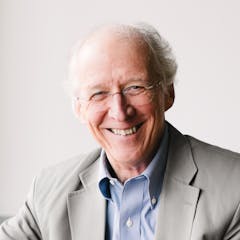
John Piper is founder and teacher of Desiring God and chancellor of Bethlehem College and Seminary. For 33 years, he served as pastor of Bethlehem Baptist Church, Minneapolis, Minnesota. He is author of more than 50 books, including Desiring God: Meditations of a Christian Hedonist and most recently Foundations for Lifelong Learning: Education in Serious Joy.

William Kelly

G C Willis
Timothy Stunt said …

This would appear to be George Christopher Willis (1889-1973) a Canadian missionary in China (1921-49) who wrote I was among the captives: Life in a Japanese Concentration camp (Singapore: Christian Bookroom, ?1946). He is easily confused with his son, a medical doctor of the same names (1923-2012) who served, for a time, in Borneo. I assume it was the older GCW who revised and slightly abridged Andrew Miller’s “The Brethren” Commonly so-called: A Brief Sketch, which was published from the Christian Bookroom, Kowloon, c.1963. In the introduction, if my memory serves me correctly, the editor noted disapprovingly that Open Brethren still fail to ‘judge the Bethesda question’. There is a biography of the older GCW (1889-1973) by William A Willis, Unless a Grain of Wheat (W.A.Willis, 2014). To confuse us still further there is a third generation GCW, who is a physician working in Singapore. See https://sites.google.com/site/virtualclinicofdrgcwillis/home/personal-history. I would gladly learn more from better informed correspondents! Timothy Stunt
Thursday, Jun 10, 2021 : 00:57
Jonathan said …
There is a fascinating autobiography of this GCW’s mother, AF Willis, which tells the story of her remarkable life having emigrated from England, then to Canada, and finally to China. It also contains observations of Darby’s visit to Brantford in the 1870s. And also the astonishing life challenges of frontier life during that time! https://www.amazon.com/Days-My-Pilgrimage-F-WILLIS/dp/B017KYP9UY
PS and something of GCW in early years, hence adding the comment here.

W C turner
William George Turner, born 1875, called home aged 80 on 31-8-1955, buried at St. Nicholas at Wade, Thanet, Kent.
He also wrote many articles in ‘Gospel Gleanings, ‘The Messenger’, ‘The Bible Monthly’ and some in ‘The Bible Treasury’.

H H Snell
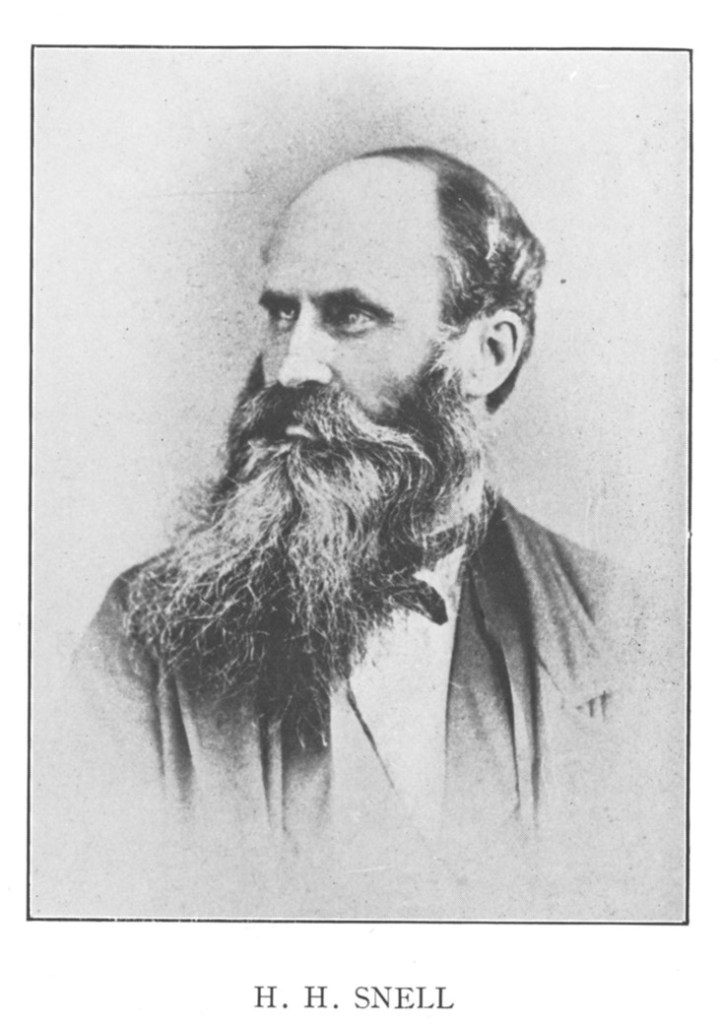
Hugh Henry Snell was born in 1815. He was converted early in life. He practised as a doctor at Lifton, on the banks of the Tamar, in Devon, and also at Launceston, Cornwall. He frequently preached at the little meeting of “brethren” at the latter place. Afterwards, on removing to Plymouth, he associated himself with J. L. Harris and Henry Bulteel—both ex-clergymen—for many years in preaching and teaching. He gave up his practice, and devoted his life entirely to the work he believed God had called him to. While at Plymouth he entertained the Lord’s servants most hospitably, R. C. Chapman being a frequent guest; and John Hambleton mentions in his well-known book, “Buds, Blossoms, and Fruits,” that he stayed with “Brother” Snell at Plymouth. Later on Mr. Snell preached and taught in many of the large cities and towns of England and Ireland, besides visiting and confirming (in the true Scriptural sense, i.e., strengthening) the smaller meetings then springing up all over the country. Eternity alone will declare the value of this work. Equally gifted with his pen, he wrote largely on prophetical and other subjects. His works most known being “Streams of Refreshing,” which has run through twelve editions; “Notes on the Book of Revelation,” “Lectures on the Second Coming,” “Inspiration of the Scriptures.” He was a much valued speaker at the famous Meetings on Prophecy at the Freemasons’ Hall, in 1864, and it is interesting to note that the other speakers at these meetings included such gifted “chief men” as L. Strong, J. L. Harris, H. W. Soltau, J. M. Code, Lord Cavan, P. H. Gosse, W. Lincoln, C. Hargrove, and several others. Mr. Snell fell asleep in Jesus, very happily, at Stafford in 1891.

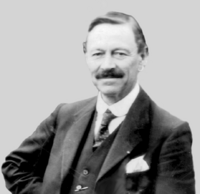
F B Hole
2-2-1874 — 25-1-1964
Mr Hole’s parents were Samuel (Mercantile Clerk) and Clara (née Faulkner, younger sister of Ellen, mother of Hamilton Smith). He was born in the same neighbourhood as Hamilton Smith – Castelnau Villas, Barnes.Author Index
These notes are extracts from Mr. John Blackburn’s address at the funeral service for Mr Hole in the Chiltern Road Hall, Sutton, Thursday, 30th January 1964.
He was entirely careless of human estimation of his work. To him the words of Churchill about General Gordon aptly apply. Describing the statue of Gordon which at that time stood in Trafalgar Square Churchill wrote “Amid the noise of the traffic as formerly that of battle the famous General stands and inattentive to the clamour of men inquired what is acceptable to God”. It would be entirely in the spirit of such a man if he thought at all of the eminence of his labours to break in with his “non nobis Domine” — “not unto us O Lord not unto us but unto Thy Name give glory for His mercy and for Thy truth’s sake” (Psalm 115:1). F.B. Hole lived and laboured in the certainty of the resurrection life, and in the promise of the vision of perfect blessedness because he believed in a living Redeemer. During the last conversation Mr.Blackburn had with him, Mr. Hole said “I have had at times to occupy myself with the subtleties of the Faith but now that I am very old I have come back to simple things.“
He was a humble man. His contributions at fellowship meetings were usually brief but very worthwhile. His hymn in Spiritual Songs is no. 159, “O God of Grace whose saving power”. How true the fourth line, more evident now 33 years after his death: “The ranks of faith grow thinner”. The writer of these notes can remember Mr. Hole’s illustrating the difference between appropriation and assimilation by the following stories:
“Some boys were playing marbles when along came a bully who stole the marbles and put them in his pocket and ran off. The boys chased him and eventually overpowered him and made him restore their marbles to them. He had appropriated them but they did not become part of him. But a boy is about to eat an apple and another boy comes and steals it and runs off. The boy follows him and catches him but there was nothing left but the core. The apple was now assimilated into the thief’s system”.
Mr Hole was emphasising the need for formation by assimilating the Word of God into our spiritual lives.

Carl Knott

Carl and Ruth met in university and married in 1973. Carl was saved in 1975 and Ruth in 1979. After serving as a pilot and flight instructor in the Air Force, he left what had been his childhood dream of flying, to answer the Lord’s call to service, and studied under William MacDonald. He served with him for six years, training men to serve the Lord. Carl and Ruth were commended in 1981 and served under the guidance of “brother Bill” until 1986. They also took part in establishing a new assembly during this period, getting good experience for later labors as missionaries. In 1986 the Knotts were further commended to serve the Lord wherever He may lead them, initially in Spain, where they have been since then. From 1986 to 2002 they did pioneer work establishing an assembly in northern Spain in the foothills of the Pyrenees mountains, where there was no previous evangelical testimony of any kind. They later lived and served in Israel for six months (1996-1997), helping to strengthen assemblies in and near Nazareth. Their only furlough was for six months in 2002. In 2002 the Lord guided them clearly to Seville, to help in a small assembly in need of edification,rebuilding and encouragement. Carl and a Spanish brother, Lucas Batalla, work together in the oversight, teaching and care of the saints. The Seville assembly has a website with a menu option for English: http://berealibros.wix.com/asambleabiblicabetel
Carl and Ruth use hospitality to reach out to both believers and unbelievers. They also visit the assembly in Gibraltar to encourage them http://ggospel.wix.com/gibraltargospelhall He continues writing, translating and publishing Christian material, and this work takes up considerable time. Ruth helps in proofreading and text preparation. They also prepare and send out a monthly magazine free of charge, in Spanish: EN ESTO PENSAD, which contains articles for edification and also gospel content. Carl travels occasionally to minister in Hispanic assemblies in the U.S. and various Latin American countries. His articles appear in magazines such as Missions, Uplook, Cornerstone and Milk & Honey. In conjunction with the Seville assembly Carl established a non-profit publishing ministry that operates by faith: Berea Libros, whose books may be viewed on the assembly website under the tab “libros” (for Spanish books), or “books” (for English books).

Graham Scroggie
I knew little about this man so I searched on the Internet and found this article, which I converted into a Video/Audio, and republished it. Here are some links to the text: https://downtoearthbutheavenlyminded.com/2024/03/13/graham-scroggie-and-evangelical-spirituality/
https://biblicalstudies.org.uk/pdf/sbet/18-1_71.pdf

Irving Risch

I am the author of this blog, and the author of a few books as well. I publish all these audio/videos on this blog and on my YouTube channel.

 Down to Earth But Heavenly Minded