
Authors, Page 4
- James McCarthy
- William McRae
- D L Moody
- James T Naismith
- William R Newell
- Thomas Newberry
- Donald Norbie
- J Boyd Nickolson
- Peter J Pell
- George Rainey
- Charles W Ross
- Daniel C Snaddon
- J C Ryle
- H L Rossier
- Edwin G Spahr
- Daniel Smith
- Andrew Shelor
- Leonard Sheldrake
- Walter Scott
- Elloit Van Ryn
James McCarthy

Jim McCarthy grew up in San Francisco, California, having been raised by devout Roman Catholic parents who immigrated to the United States from Ireland. A product of the Catholic parochial school system, he later obtained degrees in electrical engineering and broadcasting. Jim and his wife, Jean, came to Christ in their early twenties through a home Bible study sponsored by a small nondenominational church.
Jim found it difficult to leave the Catholic Church. During the two years following his conversion, he did extensive studies in Catholic theology. Once convinced that the teachings of Rome could not be reconciled with Scripture, he left the Church.
In 1981 Jim help found the ministry of Good News for Catholics, Inc., to educate Christians about Catholicism and to bring the gospel to the Catholic people. Since then he has produced numerous products to help Catholics. He is the producer and director of the popular video Catholicism Crisis of Faith and the author of The Gospel According to Rome, a fully documented analysis of Roman Catholicism keyed to the Catechism of the Catholic Church. Jim’s best-selling work is a 16 panel fold-out pamphlet titled What You Need to Know About Roman Catholicism. His latest book is Letters Between a Catholic and an Evangelical, recently released by Harvest House Publishers. His other works include What Every Catholic Should Ask (Harvest House), What You Need to Know About Roman Catholicism: Quick Reference Guide (Harvest House), and The Pocket Evangelism Kit (Lumen Productions). His latest book, Talking to Catholic Friends and Family, is scheduled for release in August 2005.
Jim and Jean have three daughters and live in San Jose, California. There he serves as an elder in a nondenominational church. He is a frequent conference speaker and teaches on a variety of topics both in North America and overseas.Close


William McRae
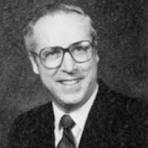
Dr. William J. McRae was born and raised in Toronto, Canada, where he became a believer in Jesus Christ in his early teens. He is a graduate of Emmaus bible School, 1954; Toronto Teachers College, 1955; Queens University, 1966; and Dallas Theological Seminary, 1970, 1983. A former school teacher, Dr. McRae has been engaged in a Bible teaching and pastoral ministry for the past twenty-seven years in Canada and the United States. From 1966 to 1975 he was involved in a pastoral and Bible teaching ministry in Believers Chapel. Since 1982 he has been president of Ontario Bible College and Ontario Theological Seminiary in Toronto, Canada.

D L Moody
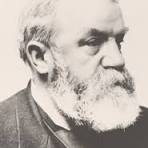
Biography of D.L. Moody
Written by: Unknown Posted on: 03/13/2003
Category: Biographies
Source: CCN
Dwight Lyman Moody BORN: February 5, 1837 DIED: December 22, 1899 Northfield, Massachusetts[qm]Northfield, Massachusetts LIFE SPAN: 62 years, 10 months, 17 days
DWIGHT LYMAN MOODY was the first evangelist since Whitefield to shake two continents for God.
It was on his mother’s birthday that Moody was born on a small New England farm. He was only four when his father, Edwin, a bricklayer and an alcoholic, died suddenly at 41. His mother, Betsy (Holton), was now a widow at 36 with seven children…the oldest being thirteen, and D.L. being the youngest. Twins were born one month after the death of the father bringing the total to nine. Their uncle and the local Unitarian pastor came to their aid at this time. The pastor also baptized Moody (age five) in 1842. This was undoubtedly sprinkling and his only “baptism” experience.
Six-year-old Moody never forgot seeing his brother Isaiah leave home. The reconciliation, years later, became an illustration in a sermon depicting God welcoming the wanderer home with outstretched arms. Moody’s education totaled seven grades in a one-room school house and during his teenage years he worked on neighboring farms.
On his seventeenth birthday (1854), Dwight Moody went to Boston to seek employment. He became a clerk in Holton’s Shoe Store, his uncle’s enterprise. One of the work requirements was attendance at the Mount Vernon Congregational Church, pastored by Edward Kirk. Church seemed boring, but a faithful Sunday School teacher encouraged him along. One Saturday, April 21, 1855, the teacher, Edward Kimball, walked into the store and found Moody wrapping shoes. He said, “I want to tell you how much Christ loves you.” Moody knelt down and was converted. Later he told how he felt, “I was in a new world. The birds sang sweeter, the sun shone brighter. I’d never known such peace.” Not sure of his spiritual perception, it was a year before the church admitted him for membership!
On September 18, 1856, he arrived in Chicago where another uncle, Calvin, helped him obtain a position in a shoe store operated by the Wiswall brothers. His interest in church work continued as he joined the Plymouth Congregational Church. He rented four pews there to provide lonely boys like himself a place of worship. Then he joined the mission band of the First Methodist Church, visiting and distributing tracts at hotels and boarding houses. Here he met wealthy dry goods merchant John V. Farwell, who later would be a great help. He also worked out of the First Baptist Church where he was later married. The prayer revival that was sweeping the nation in 1857-59 also contributed to his enthusiasm for the things of God. Discovering a little afternoon Sunday School on the corner of Chicago and Wells he offered his help. He was told there were already nearly as many teachers as students so he began recruiting. The first week he brought in eighteen students, doubling the Sunday School! Soon his recruiting overflowed the place.
He withdrew to the shores of Lake Michigan in the summer of 1858 and taught children, using pieces of driftwood as chairs. He was dubbed “Crazy Moody” about this time, but respect came through the years as the title slowly changed to “Brother Moody,” “Mr. Moody,” and finally, “D.L. Moody.”
In the fall of 1858, he started his own Sunday School in an abandoned freight car, then moved to an old vacant saloon on Michigan Street. A visiting preacher reported his favorable impressions…seeing Moody trying to light the building with a half-dozen candles and then with a candle in one hand, a Bible in the other, and a child on his knee teaching him about Jesus.
The school became so large that the former Mayor of Chicago gave him the hall over the city’s North Market for his meetings, rent free. Farwell visited the Sunday School and became the superintendent upon Moody’s insistence. The use of prizes, free pony rides and picnics along with genuine love for children soon produced the largest Sunday School in Chicago, reaching some 1,500 weekly. Moody supervised, recruited, and did the janitor work early Sunday morning, cleaning out the debris from a Saturday night dance, to get ready for the afternoon Sunday School.
It was in June, 1860, that Moody decided to abandon secular employment and go into the Lord’s work full time. He was now 23 and in only five years had built his income up to $5,000 annually and had saved $7,000. Friends believed he could have become a millionaire had he concentrated his efforts in business. Income for the first year in his Christian ventures totaled no more than $300.
This decision was prompted by the following incident. A dying Sunday School teacher had to return east because of his health and was greatly concerned about the salvation of the girls in his class. Moody rented a carriage for him and the teacher and went to each girl’s home winning them all to Christ. The next night the girls gathered together for a farewell prayer meeting to pray for their sick teacher. This so moved Moody that soul- winning seemed to be the only important thing to do from then on. He made a vow to tell some person about the Savior each day, even though it eventually meant getting up out of bed at times.
On November 25, 1860, President-elect Abraham Lincoln visited Moody’s Sunday School and gave a few remarks.
In 1861 Moody became a city missionary for the YMCA.
He married Emma Charlotte Revell on August 28, 1862 when he was 25 and she nineteen. The three Moody children were Emma (October 24, 1864), William Revell (March 25, 1869), and Paul Dwight (April 11, 1879).
With the advent of the Civil War, Moody found himself doing personal work among the soldiers. He was on battlefields on nine occasions serving with the U.S. Christian Commission. At the Battle of Murfreesboro in January, 1863, under fire, he went among the wounded and dying asking, “Are you a Christian?”
During the Civil War, he was also back at his Sunday School from time to time, where popular demand forced him to start a church. A vacant saloon was cleaned, rented and fixed up for Sunday evening services with the Sunday School continuing at North Market Hall until it burned in 1862. Then Kinzie Hall was used for a year. In 1863, when only 26, he raised $20,000 to erect the Illinois Street Church with a seating capacity of 1,500. It began February 28, 1864 with twelve members. This was the official beginning of what is now known as Moody Church. He preached Sunday evenings until a pastor, J.H. Harwood, was called in 1866 and served until 1869, during which time Moody served as a deacon.
The Chicago Y.M.C.A. was moving ahead also, as Moody rose to its presidency from 1866 to 1869. He had a part in erecting the first Y.M.C.A. building in America when he supervised the erection of Farwell Hall in 1867, seating 3,000. That year he also held his first revival campaign in Philadelphia.
In 1867, primarily due to his wife’s asthma, the couple went to England. He also wanted to meet Spurgeon and Mueller. On this trip, while they sat in a public park in Dublin, Evangelist Henry Varley remarked, “The world has yet to see what God will do with, and for, and through, and in, and by, the man who is fully consecrated to Him.” John Knox allegedly originated this saying that was now to burn in Moody’s soul (some historians put this Varley conversation in an 1872 trip). Moody met Henry Moorhouse also in Dublin, who said to him, “Some day I am coming to America, and when I do, I would like to preach in your church.” Moody agreed to give him the pulpit when he came.
Three incidents prepared Moody for his world-famous evangelistic crusades. First, in February, 1868, Moorhouse came as promised to Moody’s pulpit in Chicago. For seven nights he preached from the text, John 3:16, counselling Moody privately, “Teach what the Bible says, not your own words, and show people how much God loves them.” Moody’s preaching was much more effective after that.
A second incident was the meeting of Ira A. Sankey, while attending a Y.M.C.A. convention in Indianapolis in July of 1870. Moody was to speak at a 7 a.m. prayer meeting on a Sunday morning. Sankey was there. When Moody asked for a volunteer song, Sankey began to sing, There Is a Fountain Filled with Blood. Moody’s reaction? “You will have to come to Chicago and help me. I’ve been looking for you for eight years!” Sankey left his post office job in Pennsylvania and joined Moody in Chicago in early 1871.
A third incident was the Chicago fire and the ensuing filling of the Holy Spirit. On Sunday night, October 8, 1871, while preaching at Farwell Hall, which was now being used because of the increased crowds, Moody asked his congregation to evaluate their relationships to Christ and return next week to make their decisions for Him. That crowd never regathered. While Sankey was singing a closing song, the din of fire trucks and church bells scattered them forever, for Chicago was on fire. The Y.M.C.A. building, church, and parsonage were all to be lost in the next 24 hours. The church was reopened on December 24, 1871, and it was now called the North Side Tabernacle, located on Ontario and Wells Street, close to the former building. There was no regular pastor at this church in its brief history 1871-1876.
While out east raising funds for the rebuilding of this church, Moody describes a life-changing experience he had upon locking himself in a room of a friend’s house: “One day, in the city of New York, oh what a day! I cannot describe it. I seldom refer to it. It’s almost too sacred an experience to name. Paul had an experience of which he never spoke for fourteen years. I can only say that God was revealed to me, and I had such an experience of His love that I had to ask Him to stay His hand.”
In 1872, he returned briefly to England where he accepted an invitation to the Arundel Square Congregational Church in London. The evening service ended with nearly the entire congregation in the inquiry room. He continued on for ten days with some 400 people saved. It was learned that an invalid had been praying for two years for him to come to the church!
Three English men invited him back the following year. With their families, Moody and Sankey left June 7, 1873. Little did they know that they were going to shake England as Whitefield and Wesley had 125 years previously. Two of the sponsors had died by the time they arrived and they were fortunate to get an invitation to conduct some meetings at the York Y.M.C.A. Five weeks of meetings saw 250 won to Christ. F.B. Meyer was the principal supporter. Then they traveled on to Sunderland for five weeks with Arthur A. Rees, the host. Next came Newcastle where the meetings were gigantic with special trains bringing people in from surrounding areas. Here a novel all-day meeting was held and their first hymn book was introduced to the public.
Now being invited to Scotland, the evangelists began in Edinburgh on November 23. For hundreds of years, only Psalms had been sung here with no musical instruments. Now Sankey began “singing the Gospel” and crowds packed out the 2,000-seat auditorium. By the time the last service was over on January 20th, Moody was receiving requests from all over the British Isles. They spent two weeks in Dundee and then began the Glasgow, Scotland, crusade on February 8, 1874. These meetings soon moved into the 4,000-seat Crystal Palace and after three months climaxed with a service at the famed Botanic Gardens Palace. Moody was unable to even enter the building surrounded by 15,000 to 30,000 people, so he spoke to them from a carriage and the choir sang from the roof of a nearby shed! Later the team returned to Edinburgh for a May 24 meeting held on the slopes of “Arthur’s Seat” with a crowd of 20,000. An estimated 3,500 converts were won in each of these two places.
Now Ireland was calling, so they began at Belfast on September 6, 1874. People flocked to hear them and the largest buildings of each city were used. A great climactic service was held in the Botanic Gardens on October 8, in the open air with thousands attending. One final service was held October 15 with admission by ticket only. Tickets were given only to those who wanted to be saved. Two thousand, four hundred came. Next it was Dublin (October 26-November 29,) where even the Irish Catholics were glad at the awakening amongst their Protestant neighbors. The Exhibition Hall seating 10,000 was filled night after night with an estimated 3,000 won to Christ.
Back in England on November 29, the Manchester crusade was held at the Free Trade Hall. No hall was large enough! As many as 15,000 were trying to gain admission for a single service. Next came Sheffield for two weeks beginning on December 31st, then Birmingham with untold blessing. The January 17-29, 1875 crusade noonday prayer meetings drew 3,000. Bingley Hall seated only 11,000 but crowds of 15,000 came nightly. Liverpool was next, where the 8,000-seat Victoria Hall was used from February 7 to March 7.
Finally, it was the London Crusade climaxing the tour. It was a four-month encounter from March 9 to July 11. Five weeks of preaching began in the Agricultural Hall in the northern part of the city. Then he moved to the east side in the 9,000-seat Bow Road Hall for four weeks. Next came the west side in The Royal Haymarket Opera House. Often, during this time, Moody would hold a 7:30 meeting with the poor on the east side, and then shuttle over for a 9 p.m. service with the fashionable. Then on the south side of London he spoke for several weeks in the Victoria Theatre until a special tabernacle seating 8,000 was constructed on Camberwell Green where he finished this crusade. A total of two and one-half million people attended! The awakening became world news and it was estimated that 5,000 came to Christ. A final preaching service was held in Liverpool on August 3rd before sailing for America. He arrived home August 14 and hurried to Northfield to conduct a revival. His mother, many friends and relatives were saved there. Invitations for city-wide crusades were coming from many places in America now.
His first city-wide crusade in America was in Brooklyn beginning October 31, 1875, at the Clermont Avenue Rink, seating 7,000. Only non-church members could get admission tickets as 12,000 to 20,000 crowds were turned away. Over 2,000 converts resulted.
Next came Philadelphia starting on November 21 with nightly crowds of 12,000. The Philadelphia crusade was held at the unused Pennsylvania freight depot which John Wanamaker had purchased. It was located at Tenth and Market. His ushers were very well trained, capable of seating 1,000 people per minute, and vacating the premises of some 13,000 in 4 minutes if needed. The doors were opened one and a half hours early and in 10 minutes the 12,000 seats were taken. On January 19, 1876 President Grant and some of his cabinet attended. Total attendance was 1,050,000 with 4,000 decisions for Christ.
Next it was the New York crusade running from February 7 to April 19, 1876. The meetings were held in the Great Roman Hippodrome on Madison Avenue, where the Madison Square Gardens now stands. Two large halls gave a combined seating attendance of 15,000. Moody had just turned 39 for this crusade. Some 6,000 decisions came as a result of his ten-week crusade. Three to five services a day were held with crowds up to 60,000 daily.
Back in Chicago, his beloved church was expanding. Property had been purchased on Chicago Avenue and LaSalle Street. Thousands of children contributed five cents each for a brick in the new building. The basement, roofed over, served as a meeting place for two years, then in 1876 the building was completed and opened on June 1, 1876, and formally dedicated on July 16 with Moody preaching. It was now called the Chicago Avenue Church, and W.J. Erdman was called as pastor.
The Chicago crusade started October 1, 1876 in a 10,000-seat tabernacle, closing out on January 16, 1877. The sixteen-week crusade was held with estimates being from 2,500 to 10,000 converts. Moody never kept records of numbers of decisions, hence reports vary. The meetings were held in a temporary tabernacle erected on Farwell’s companies’ property, located at Monroe and Franklin, which was converted to a wholesale store after the crusade.
The Boston crusade was held January 28 to May 1, 1877 in a tabernacle seating 6,000. The years 1877-78 saw many smaller towns in the New England states being reached. The years 1878-79 saw Baltimore reached in 270 preaching engagements covering seven months. In 1879-80, it was six months in St. Louis where a notorious prisoner, Valentine Burke, was saved among others. In 1880-81 it was the Pacific coast, primarily San Francisco.
Moody went back to England in September 1881, returning home for the summer of 1882. He returned for an important student crusade at Cambridge University in the fall of 1882, then back to America, and returned the following fall for a crusade in London from November 4, 1883 to January 19, 1884, where some two million heard him in various auditoriums. Wilfred Grenfell was among those saved and young C.T. Studd was also won indirectly.
From 1884 on, his crusades were smaller and limited to October to April. He spent his summer months in Northfield, Massachusetts for study, rest, family and development of his schools.
From 1884-1886 he was in many of the smaller cities of the nation, remaining about three days in each place. In 1888-1889 he was on the Pacific coast from Vancouver to San Diego. In 1890 he held his second crusade in New York, in November and December.
A last trip was taken in 1891-92 to England, Scotland (99 towns), France, Rome and Palestine, where he preached on the Mount of Olives on Easter Sunday morning. On his trip home to America, he endured a shipwreck, a dark hour of his life, but God spared him.
Peter Bilhorn, who substituted for Sankey in the 1892 Buffalo, New York, crusade, tells his amazement at Moody’s personal work, observing him lead the driver of a carriage to the Lord in the midst of a violent rainstorm.
In 1893 he had the “opportunity of the century.” The World’s Columbian Exposition (World’s Fair) was to be held in Chicago from May 7 to October 31. He had a burden to saturate Chicago with the gospel during this time. Using many means and meetings in different languages, including 125 various Sunday services, thousands were saved. Exactly 1,933,210 signed the guest register of the Bible School.
In 1895 he had a large crusade in Atlanta. That same year a roof collapsed on a crowd of 4,000 at Fort Worth, Texas. Fortunately, there were no deaths.
In 1897 he conducted another large Chicago crusade, packing out a 6,000-seat auditorium.
His church which was renamed Moody Church in 1901 (two years after his death) continued to progress with the following pastors: Erdman (1876-78), Charles M. Morton (1878-79), George C. Needham (1879-81), no regular pastor (1881-85), Charles F. Goss (1885-90), Charles A. Blanchard (1891-93), and Reuben A. Torrey, who began as pastor in 1894.
Moody’s interest in schools left him a lasting ministry. The forming of the Northfield Seminary (now Northfield School for Girls) in 1879, and the Mount Hermon Massachusetts School for Boys (1881) was the beginning. The Chicago Evangelization Society (later Moody Bible Institute) was opened with the first structure completed on September 26, 1889 with R.A. Torrey in charge. The school was an outgrowth of the 1887 Chicago Crusade.
In 1880 he started the famous Northfield Bible Conferences which continued until 1902, bringing some of the best speakers from both continents to the pulpit there. The world’s first student conference was held in 1885 and the Student Volunteer Movement started two years later as a natural outgrowth.
In 1898 Moody was chairman of the evangelistic department of the Army and Navy Christian Commission of the Y.M.C.A. during the Spanish-American War.
He started his last crusade in Kansas City in November, 1899. On November 16, he preached his last sermon on Excuses (Luke 14:16-24) and hundreds were won to Christ that night. He was very ill afterward, the illness thought to be fatty degeneration of the heart. Arriving home in Northfield November 19 for rest, he climbed the stairs to his bedroom–never to leave it again. He died about seven a.m. December 22, with a note of victory. He is reported to have said such things as the following at his death: “I see earth receding; heaven is approaching (or opening). God is calling me. This is my triumph. This is my coronation day. It is glorious. God is calling and I must go. Mama, you have been a good wife…no pain…no valley…it’s bliss.”
The funeral was on December 26 with C.I. Scofield, local Congregational pastor, in charge. Memorial services were held in many leading cities in America and Great Britain. Moody left to the world several books, although he never wrote a book himself. His Gospel sermons, Bible characters, devotional and doctrinal studies were all compiled rom his spoken word, those after 1893 by A.P. Fitt. However, he read every article and book before they were published. His innumerable converts were estimated by some as high as 1,000,000.
R.A. Torrey, one of his closest friends, writes his conclusions in his famous Why God Used D.L. Moody: (1) fully surrendered, (2) man of prayer, (3) student of the Word of God, (4) humble man, (5) freedom from love of money, (6) consuming passion for the lost, (7) definite enduement with power from on high.
Perhaps the world HAS seen what one man totally consecrated to God can do.

James T Naismith
Dr. James Naismith, born in India in 1923 to missionary parents Archie and Alice, went Home to be with his Lord on Feb 9, 2009. At age 5, James was entrusted to the care of a family in Scotland. He graduated high school at age 16 and university at age 21, becoming the youngest doctor in Scotland. James was a founder of Kawartha Lakes Bible College and one of its most loved teachers. He retired at age 60 to devote himself more fully to the Lord’s work. James traveled throughout many countries, preaching, teaching, and encouraging God’s people. He authored many magazine articles and several books.

William R Newell
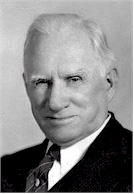
William Reed Newell was born May 22, 1868 and attended Wooster (Ohio) College, graduating in 1891. After studies at Princeton and Oberlin Seminaries, he pastored the Bethesda Congregational Church in Chicago until 1895, when Moody invited him to become the assistant superintendent of Moody Bible Institute under R.A. Torrey. In this position Newell demonstrated his extraordinary gift of Bible exposition. Great audiences in Chicago, St. Louis and Toronto flocked to hear his city-wide Bible classes, leading to the publication of his widely-known commentaries, especially Romans Verse-by-Verse, Hebrews Verse-by-Verse, and The Book of Revelation.
During this period, Newell wrote the beloved Gospel hymn At Calvary. He was called into the presence of the One he gladly owned as his King on April 1, 1956. Few men have had a clearer grasp of the magnitude of God’s grace in Christ or have been able to convey it with such lasting results.

Thomas Newberry
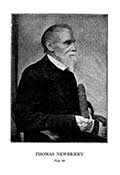
The Englishman, Thomas Newberry (1811-1901) could thank God for a mother and older sister who were both spiritually atuned and able to communicate the gospel clearly. Through their consistent Christian testimony, he was tutored in the holy Scriptures from childhood. At an early age he was born again by the incorruptible Word of God, which lives and abides forever ( 1 Pet. 1:23 ). So from start to finish his Christian life was characterized by respect and love for the Scripture. About Newberry we could say, God’s words were found, and he ate them, and God’s Word was to him the joy and rejoicing of his heart ( Jer. 15:16 ).
He was a hearty soul, but the fire burned under the surface. Throughout his long and active life, he was a man recognized as being “mighty in the Scriptures.” In an era of explosive church growth, colored by flamboyant and eccentric evangelists, Newberry was a steady, reliable, and profitable expositor of the Bible.
He had always been a regular reader of the Word of God, until his twenty-ninth year. Before then, he read the Bible for comfort and direction. But in 1840 he determined to read the Scriptures in the original Hebrew and Greek.
We know almost nothing of his family life, financial circumstances, or when he came into assembly fellowship in the English coastal city of Weston-super-Mare. What we do know is that it was diligent Scripture study that led Newberry to link up with the assembly that met in a small hall on Meadow Street in the early 1860s. Like so many other Bible students, he came to see that the common ecclesiastical set-up was not in harmony with the Word of God. His complaint with the surrounding congregations was that “many of the customs were based upon expediency rather than conformity to ‘the law and the testimony’ ( Isa. 8:20 ); that principles and practices (which were plainly recorded in the Epistle to the Corinthians and other Scriptures) as characteristic of the churches of God as founded by the apostles, after the Divine pattern given to Paul (‘the wise masterbuilder’), were not being observed, although 1 Corinthians 1:1-2 said they were binding upon ‘all that in every place call upon the Name of Jesus Christ our Lord.’” (Chief Men Among the Brethren).
The conclusion forced on Newberry was that he was not able to preach, teach, and practice all that he found in God’s Word as long as he tried to work within the ecclesiastical machinery of the day. The Word of God was being violated and/or ignored at too many points, compelling him to seek out a group of believers who would keep the ordinances of the Lord as they were “delivered” (see 1 Cor. 11:2 ).
Those were days of evangelistic reaping. There certainly was clamor and excitement enough to keep an army of Christians busy from dawn to dusk. When ten different needs are all tugging at your time, you need to know what your mission is, and hold to your course. Evidently Newberry knew how to secure large blocks of solitude, and to use that time efficiently. He did just that.
In 1863, friends in London gave him a copy of Tischendorf’s transcription of the New Testament according to the Codex Sinaiticus. Meticulously, he neatly handwrote his notes throughout the edition. Two years later, he commenced what would be the best memorial of his vigorous life. As the editor of The Englishman’s Bible (since his passing, it is known as The Newberry Study Bible), he produced a monumental study aid that stands alongside G. V. Wigram’s Englishman’s Concordances to the Greek and Hebrew, and W. E. Vine’s Expository Dictionary of New Testament Words.
In 1866, a tall, forceful nobleman (some might say domineering) named Granville Waldegrave (Lord Radstock) came to Weston-super-Mare for evangelistic meetings on the invitation of the Earl of Cavan. A German educator by the name of Dr. Frederick Baedeker attended one of these meetings. One night as Baedeker was slipping out of the auditorium, Waldegrave laid his hand on his shoulder and said, “My man, God has a message through me for you tonight.”
Baedeker followed the evangelist into the anteroom and Baedeker’s biographer writes, “In presence of the crowd he did so, and the two were soon on their knees. During those solemn moments, a work was done in Dr. Baedeker whereby the accumulated infidelity of years was dissipated forever. God was acknowledged, the Saviour trusted, and the joy of salvation soon filled his soul. The experience of that memorable night would be by himself thus tersely expressed: ‘I went in a proud German infidel, and came out a humble, believing disciple of the Lord Jesus Christ. Praise God!’”
Who were the men who mentored the new believer? There in his home assembly, he would weekly benefit from the thorough, serious exposition of Thomas Newberry. Weston-super-Mare is not far from Bristol, where another German lived and labored. That man, George Muller, soon made contact with Frederick Baedeker. Here was an ideal combination: Waldegrave’s evangelistic abandon, Muller’s prayer life, and Thomas Newberry’s deep Bible teaching. Under these influences, Baedeker made long strides in his Christian life. Already by 1874 Baedeker was translating for Lord Radstock as he preached in Europe. Thereafter Baedeker made missionary trips into Germany, and from there into Russia, where he carried on an extensive, fruitful, and far-flung ministry.
Content to stay in the shadows of anonymity while others blazed on in their missionary exploits, Newberry quietly pursued his calling. Locally his ministry nourished the now flourishing Weston-super-Mare assembly, and neighboring meetings. He was not a brother who whiled away his time wondering what his spiritual gift was, or gadded about to a conference here and a seminar there to hear symposiums on “How to Discover the Will of God for Your Life.” He had a definite sense of God’s hand on him.
Under Newberry’s carefully editing, the new study Bible was taking shape. Using special markings to indicate features in the original languages which did not show in English, he was making a way to help English readers understand the precious treasures God has given in His Word.
The Englishman’s Bible was published in five or six editions between the late 1870s and 1902. On the title page on one of the earliest editions of the Old Testament we read, “The Englishman’s Hebrew Bible, Shewing the Urim and Thummim, the Lights and Perfections of the Inspired Original on the Page of the Authorized Version, a Fac-simile of the Hebrew Scriptures in English.”
Newberry’s study Bible has been issued in three sizes: Library or bold type; Portable, or middle size; and Pocket size. Today the portable Newberry is published by Kregel publications, and John Ritchie publishes the pocket-size. The Newberry is prized by Bible students. There is a learning curve to overcome, but once ordinary readers know Newberry’s markings and notations, it will become one of the best helps to enable ordinary readers to delve into, and wonder at the beauties of the Scripture in the original languages.
In the February 1889 issue of The Bible Treasury, William Kelly included this review of Newberry’s Companion to the Englishman’s Bible: “This slender quarto consists of eleven chapters, meant to illustrate and explain the value of his Englishman’s Hebrew O.T., and Greek N.T., as far as can be for those who do not know the original tongues. The reader will find in the work not a few profitable hints conveyed in a clear and compact manner. Mr. N. is not a little attached to the Text. Rec. and the A.V., and indisposed to go with the Revisers in their admiration of their own work.”
Scholars such as F. F. Bruce admired Newberry’s immense labors: “Newberry had no axe to grind. He was a careful and completely unpretentious student of Hebrew and Greek texts, whose one aim was to make the fruit of his study available as far as possible to Bible students whose only language was English. His procedure tended to make the Biblical text self-explanatory as far as possible; he had no thought of imposing on it an interpretive scheme of his own.”
In his final years, thousands profited by Newberry’s lectures on the tabernacle and Solomon’s temple. He designed a fine model of the temple. Those who saw it said it was “quite unique in its design and workmanship.”
He ministered the Word alongside Robert Chapman, Henry Dyer, and George Muller, expounding the Scriptures around the British Isles, contributed Bible teaching articles to The Witness and other magazines, and conducted an extensive correspondence with Bible students across the world. Frederick Tatford tells us that Newberry was used by God in establishing an assembly in Nice, France, among many Italian-speaking residents in 1895.
Fresh and alert for God right to the end, he lived long enough to prove the words of the Psalmist, “They shall still bear fruit in old age; they shall be fat [fresh] and flourishing.” He went to be with Christ from Weston-super-Mare on January 16, 1901.
Near the end, he wrote: “As the result of a careful examination of the entire Scriptures in the originals, noticing and marking where necessary every variation of tense, preposition, and the signification of words, the impression left upon my mind is this: not the difficulty of believing the entire inspiration of the Bible, but the impossibility of doubting it….The godliness of the translators, their reverence, the superiority of their scholarship, and the manifest assistance and control afforded to them by the Holy Spirit in their work, is such that the ordinary reader can rely upon the whole as the Word of God.”
John Bjorlie
Books written by Thomas Newberry
Notes on the Temple
Notes on the Tabernacle
Outlines of the Revelation
Solar Light as Illustrating Trinity in Unity
The Expected One
The Parables of Our Lord
The Perfections and Excellencies of Scripture
The Song of Solomon
The Temples of Solomon and Ezekiel
Types of the Levitical Offerings
Materials for this Article are taken from:
The Bible Collector Jan.-Mar. 1966, No. 5
Hy. Pickering, Chief Men Among the Brethren, Loizeaux
David J. Beattie, Brethren, the Story of a Great Recovery, Ritchie
F. F. Bruce, The English Bible, Oxford

Donald Norbie
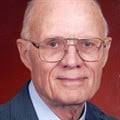
Donald Norbie was born in 1923 in Minnesota. He was saved in 1938. He continued his college education after World War II and serving in the U. S. Navy. After completing his graduate work, Donald and his wife, Marie, were commended to the Lord’s work by their assembly in Wheaton, Illinois in 1949. He taught at Emmaus Bible School for three years. After this, he and his family moved to Oklahoma to evangelize and teach the Bible. In 1970, they moved to Colorado and have lived there ever since. Mr. Norbie continues to be active in evangelism, teaching, and writing. Some of his titles include: Lord’s Supper: The Church’s Love Feast, Parables: Truth Illuminated and Life Is a Mountain: God’s Faithfulness in the Life of Donald Norbie.

J Boyd Nickolson
Boyd Nicholson passed into the Lord’s presence on Sunday, November 12, 2000 from MacMaster University Hospital. Beloved husband of Bernice (nee Robertson), loving father of Cathie (Bob) Cretney, J. B. (Louise), and Bill (Rona, deceased). Cherished grandfather of Lynn (David) Shatford, John (Janice), Brian (Jackie) Cretney, Joanna (Zachary) Garner, Beth (Crawford) Paul, Craig, Moira, Heather, Lindsey, Sharon, Andrea, David, and Sara. Great-grandfather of B. J., Andrew, & Ethan Nicholson, and Abigail Shatford.
Together we thank the Lord for the godly influence he had in all our lives.
“And thou shalt be like a watered garden, and like a spring of water, whose waters fail not … thou shalt raise up the foundations of many generations; and thou shalt be called, The repairer of the breach, the restorer of paths to dwell in” (Isaiah 58:11-12).
“If, when I die, this is all that’s placed on my grave:
This man raised up, this man repaired, this man restored,’
my life would have been worth it all.” -J. BOYD NICHOLSON
John Boyd Nicholson was born into a Christian home in the town of Blantyre, Scotland on July 14, 1922. He had one sister, Ella, who died as a child. Blantyre was also the birthplace of David Livingstone, and the two men would eventually be linked by their great love for Africa.
When Boyd was still a child, the family moved to Glasgow where he attended Shawlands, Academy At the age of 17, his grandfather and hero, (also named John Boyd Nicholson) died. His last words were, “I will dwell in the house of the Lord forever” (Ps. 23:6). Boyd was deeply shaken by this event because he realized that were he the one dying, he would not be able to truthfully say that. This led to a clear conviction of his need for a Saviour and he placed his trust in the finished work of Christ, receiving the gift of eternal life in the Lord Jesus.
During World War 11, he qualified as a pilot in the Royal Air Force, taking some of his training in Canada. It was during this time that he met Bernice (nee Robertson) who in 1947 would become his beloved wife.
After being commissioned, he served with tours of duty in India and Burma. Although trained on bombers, he never dropped a bomb in action. Instead, in transport command, he dropped supplies (often behind enemy lines). In a region where the life expectancy of an air crew could be as short as two weeks, he spent two years, undoubtedly preserved by the Lord. In spite of the horrors of war, these were days of spiritual vigor for him and maturing in the things of God.
Following the war, Boyd and his parents moved to Canada. The longawaited marriage took place and the following year Cathie was born, followed by J. B. in 1951 and Bill in 1955. During these years they were in happy fellowship in Queenston Street Gospel Hall and were active in the Lord’s service. Boyd’s employment varied in the first few years after the war (jobs were scarce). But eventually he settled on printing and commercial art, which he pursued until 1960 when an attempt was made to move to Africa as servants of God. However, the Simba Rebellion and War of Independence (in what was then the Belgian Congo) prevented them from going. Instead, Boyd and Bernice were commended to the grace of God in North America. Boyd travelled both to preach the gospel and teach the saints. This has been his true life’s work: to take God’s Good News around the world. He travelled extensively in Asia, Africa, Europe and North America, preaching “the unsearchable riches of Christ.”
Over the years, Boyd was a long-time writer and editor for Christian periodicals (including Food for the Flock, Counsel and Uplook), and for many years was a regular speaker on the Family Bible Hour radio broadcast. He also authored several books. After a month-long illness, he passed into the Lord’s presence on Sunday, November 12, 2000.

Peter J Pell
No information is available for Peter J Pell. I did Not find a photo or Biography on this author. He was part of the Brethren, but that is all I know about him.
While doing the Biography on Leonard Sheldrake, I read this about Peter J Pell. “At the Bay City conference he (Leonard Sheldrake) met young William J. Pell, an inexperienced possessor of a primitive hand-operated printing press.
Bill Pell offered to print the paper in 1923 and Words of Peace became
the first publication of what would be Gospel Folio Press.”
You can find many of Peter J Pell writings at Gospel Folio Press today.

George Rainey
Again, there is no Information on George Rainey on the Internet that I could find, but He as well was part of the Brethren, but that is all I know about him.

Charles W Ross
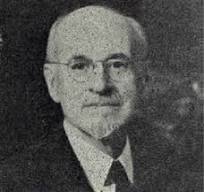
Mr. C. W. Ross, a noted and honoured teacher of the past generation on this continent, was the author of this article. It might well be said of him as of Abel, “He being dead yet speaketh.” His words are weighty and are even more applicable now than in his own time.
Charles Wedderburn Ross – 16th April 1861 ~ 22nd February 1937, age 75.
Birth: Aberdeen, Aberdeenshire, Scotland.
Marriage: 1886
Death: Kansas City, Missouri, USA.
Burial: Elmwood Cemetery, Kansas City, Missouri, USA.
Wife: Austria Caroline Turner – 3rd June 1865 ~ 11th July 1940.
Children:
Helen Leslie Ross – 29th July 1888 ~ 29th June 1917.
Caroline Bissell (W.R. Simpson) – 26th Jan. 1890 ~ 22nd May 1967.
Donald Walter (Trueman & Smith) – 22nd March 1892 ~ 2nd May 1973.
Margaret Susan (P.E. Cole) – 2nd Jan. 1894 ~ 19th Sept. 1988.
Austria Mary (O.E. Magee) – 8th July 1896 ~ 23rd Sept. 1968.
Ethel Vida (W.H. Waterman) – 4th April 1899 ~ 8th May 1967.
Marian Turner Ross – 29th March 1905 ~ 16th Sept. 1924.
Father: Donald Ross Jr. – 11th Feb. 1823 ~ 13th Feb. 1903.
Married on 14th December 1847.
Mother: Margaret Leslie – 1825 ~ 19th April 1905.
Siblings:
Half – Catherine Ross – c1847 ~
Hughina (W. Charles) – 1852 ~ 30th April 1918.
Isabella Ross – c1853 ~
Helen (A.M. Riddle) – 1854 ~ 11th March 1937.
Arthur Munro Ross – 10th May 1855 ~ 2nd May 1940.
John – c1856 ~
Mary Grace (J.M. Carnie) – 14th May 1856 ~ 1st March 1915.
Walter (M. Kirkpatrick) – 25th Aug. 1858 ~ 25th Aug. 1943.
Donald Ross, Jr. – c1859 ~
Charles W. Ross (A.C. Turner) – 16th Apr. 1861 ~ 22nd Feb. 1937.
Margaret Stevens (J. Harcus) – 14th Feb. 1863 ~ 27th Dec. 1928.
Patricia Miller (W. Chase) – 9th Jan. 1865 ~ 3rd Aug. 1907.
Jemima J. (J.K. Fea) – 6th Jan. 1867 ~ 30th April 1925.
With Christ:
C. W. Ross, of Kansas City, [Feb. 22, 1937], aged 75, after a lingering
illness. Born 1861, in Aberdeen, Scotland, the son of the well-known
Scottish Evangelist, DONALD ROSS. Came to America in 1879,
settled in Chicago, where his father had begun pioneer work in that
rapidly growing midwestern city. Saved in early manhood in a
Gospel tent meeting through that well-known Scripture, Rom. 5. 6,
and soon afterwards devoted his time to the Lord’s service.
The great distinctive truths that characterized his long life of service,
namely, “The Church a Heavenly Stranger” and “The Holy Spirit a
Present Living Reality,” sustained him in this path of faith for over
fifty years. After several years of service in and around Chicago,
he moved with his family to Elgin, Illinois, in 1892, where he laboured
for eight years, during which time the Assembly grew in numbers
and in active testimony.
In the year 1900 he moved back to Chicago, to be associated with
the Austin Meeting on the west side, but helping in all the Chicago
meetings where his ministry was much valued. In the year 1908,
he moved to Kansas City, Missouri, making this the centre for
pioneer work in the central and western states. His signal gift as
a teacher was known far and wide in the United States and Canada.
Long after his health began to fail, he continued in this service,
until confined to his home in the fall of 1936. He longed to gain
strength to follow up this service for the saints he loved so well,
but the Lord willed otherwise.
“The Witness” April 1937
. . . The funeral was held February 24th in the Troost Avenue
Gospel Hall, where a large company of the Lord’s people and
many neighbors and friends were gathered. The Word of God
was ministered and the Gospel preached by E. G. Matthews
of Waterloo, Iowa, assisted by Jahn Teller of Kansas City,
and David Horn of Longmont, Colorado. We can only say with
the Psalmist—
“As for God, His way is perfect.”
“Farewell for the present, farewell,
At most for a few fleeting years;
For soon with our God we shall dwell
And know neither sorrow nor tears.
“No parting shall ever be known
On that happy and heavenly shore;
Those seated with Christ on His throne.
Go out from His presence no more.”
The following note from Mrs. Ross expresses her gratitude for the
many letters and tributes sent to her and the members of Mr. Ross’
family:
“The expressions of sympathy I have received since my dear husband’s
death have been a great comfort to me and to the family. After over fifty
happy years together, the parting is very hard, but God still lives and
does minister comfort to our hearts, and when we think of our dear one
at home with the Lord, we can rejoice for him, and this makes it easier
to bear. I am very thankful to have been able to care for him to the last,
as this was what he wanted and what I wanted to give him.”
“Assembly Annals” 1937
Charles Wedderburn Ross (1861-1937) – Find a Grave Memorial
With Christ:
On July 11 [1940], after 5 day’s illness, Mrs. Austria C. Ross (widow of
the late Chas. W. Ross, Evangelist) went to be with Christ. Age 75.
A brief service was held in Detroit by F. W. Schwartz and J. Dickson.
Burial was in Kansas City, Mo. where the services were conducted by
E. G. Matthews and R. E. Littlefield. Born in Crown Point, Ind. Born
again at the age of 18. Associated with Assemblies from that time
until her home-going. Was a true helpmeet to her husband during the
fifty years of their married life. Mourned by five children and 8 grand-
children, and also Christians who knew her.
“Words in Season” 1940

Daniel C Snaddon
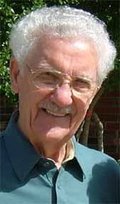
Dan Snaddon (1915-2009) or “Brother Dan” as he was known to many, ministered to many thousands through the years in Canada and the United States through his written and pulpit ministry. He will be missed, but he has left his extensive audio, and written ministry for us to be able to follow the Lord Jesus Christ, just as he did. Read more at http://dansnaddon.blogspot.com/

J C Ryle
James Sabato found this on the Internet and shared it with me.
John Charles Ryle was born of well-to-do parents at Macclesfield on 10 May 1816. After a period of private schooling, he entered Eton in February 1828, where he excelled at rowing and cricket. Going up to Christ Church, Oxford in October 1834, he continued his sporting prowess, and captained the First Eleven in his second and third years, achieving a personal 10-wicket bowling triumph in the 1836 Varsity match at Lords (which Oxford won by 121 runs).
Various circumstances and incidents in his own and others’ lives had awakened Ryle to the knowledge that all was not well with his soul, but matters came to a head not long before he took his Finals in 1837. He was struck down with a serious chest infection, and for the first time in fourteen years he turned to his Bible and prayer. Then one Sunday, arriving late to church he was in time to hear the reading of Ephesians chapter two. As he listened, he felt that the Lord was speaking directly to his soul. His eyes were opened when he heard verse 8, ‘For by grace are ye saved through faith; and that not of yourselves: it is the gift of God.’ He was converted through hearing the Word of God, without comment or sermon.
Ryle took a first in Classics, but turned down the college fellowship which was offered. His intention was a career in politics, and he went to London to study law, thinking this would be a help to him. However, he had to give this up after six months due to a recurrence of his chest problems, caused by the London smog. When his father’s bank crashed in 1841, Ryle had to give up all hope of a political career, as he now had no money behind him.
With his Oxford degree, Ryle could enter the ministry of the Church of England, and it was to this he turned, being ordained by Charles Sumner, Bishop of Winchester on 21st December 1841. Long afterwards Ryle wrote, ‘I have not the least doubt, it was all for the best. If I had not been ruined, I should never have been a clergyman, never have preached a sermon, or written a tract or book.’
Ryle started his ministry as curate at the Chapel of Ease in Exbury, Hampshire, moving on to become rector of St Thomas’s, Winchester in 1843 and then rector of Helmingham, Suffolk the following year. While at Helmingham he married and was widowed twice. He began publishing popular tracts, and Matthew, Mark and Luke of his series of Expository Thoughts on the Gospels were published in successive years (1856-1858). His final parish was Stradbroke, also in Suffolk, where he moved in 1861, and it was as vicar of All Saints that he became known nationally for his straightforward preaching and firm defence of evangelical principles. He wrote several well-known and still-in-print books, often addressing issues of contemporary relevance for the Church from a biblical standpoint. He completed his Expository Thoughts on the Gospels while at Stradbroke, with his work on the Gospel of John (1869). His third marriage, to Henrietta Amelia Clowes in 1861, lasted until her death in 1889.
After a period as honorary canon of Norwich (1872), in 1880 Ryle became the first bishop of Liverpool, at the recommendation of Prime Minister Benjamin Disraeli. His episcopate was marked by his efforts to build churches and mission halls to reach the rapidly expanding urban areas of the city. He retired in 1900 at age 83 and died later the same year in Lowestoft. His successor in Liverpool described him as ‘the man of granite with the heart of a child.’
Copied.

H L Rossier
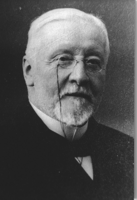
Dr. Henri L. Rossier was born on January 25, 1835 at Vevey in French Switzerland to a family that was among the first there to gather to the Lord Jesus alone. After studying medicine at Zurich and Wurzburg he settled in his native Vevey, where he lived a long life of devoted self-sacrificing service. At age 27 he married Madeleine de Graffenried from Berne, and the Lord in time granted them six children. Along with practicing medicine for well over fifty years, as time went on he increasingly devoted himself to ministering the Word in assemblies and taking part in Bible conferences in Switzerland, Germany, and France.
However, it is for his written work that he is best known today. Acquainted from his youth with J.N. Darby, he began early in life to translate this brother´s writings into French. He was helpful also with the editing of Darby´s translation of the Bible into French and with preparation of the volumes of ETUDES SUR LA PAROLE, later to become better known as the SYNOPSIS after it had been translated into English. For 58 years he served as editor of MESSANGER EVANGELIQUE, a monthly magazine for the edification of believers widely circulated throughout the French-speaking world. He wrote many articles for this magazine himself, often while being driven in a horse-drawn coach to the homes of his patients.
Besides this, he wrote commentaries on most of the books of the Bible, especially on the historical and prophetic books of the Old Testament and on the epistles of Paul and Peter and the Revelation in the New Testament. He was a prolific hymn writer as well. Some 28 of his hymns are included in HYMNES ET CANTIQUES, the hymn book used among many French-speaking assemblies and which he played a major role in compiling and revising. Some of his hymns have been translated into English, as have his commentaries on Joshua and Judges.
After a long and useful life of service, he was called home to be with the Lord on March 20, 1928 at the advanced age of 93.
The writings of H L Rossier which have been translated into English are included here, most of them by kind permission of Believer´s Bookshelf, the publisher in printed form.

Edwin G Spahr
Again, I could not find any information on Edwin G Spahr. I did find one, but he was a Baptist Pastor and was not with the Brethren.

Daniel Smith
Dan Smith (1907-1988) lived a life remarkable for its variety. Born in England of Scottish stock, he carried the gospel to remote mountains in China, India, and Sri Lanka. He preached extensively in England, Australia, New Zealand, and North America. His acquaintances and co-workers had their own notoriety–a who’s who in the Kingdom: Gypsy Smith, Samuel Chadwick, Leonard Ravenhill, G. C. Willis, J. O. Fraser, Watchman Nee, D. E. Hoste, and Bakht Singh. Smith lived boldly and presented God’s Word boldly.
As a child, shy Daniel was told that the name Smith was Gow in Gaelic and that his clan of Smiths descended from the infamous Scottish pirate John Gow who commanded “The Revenge.” Gow was hanged in London in 1725. Daniel’s grandfather was also a seagoing man, and boasted of his own foreign adventures, thus keeping piracy alive among the Smiths.
Dan’s mother came from godly Scottish Covenanter stock which eschewed all swashbuckling. Deep impressions were formed by the Presbyterian ministers which made Dan look seriously at heart issues. Their local preachers were “scholarly and evangelical.” And the missionary stories spoke loudly: “It seemed so wonderful that the Lord had chosen such people, led them to the right countries, endowed them with gifts and courage, and that they accomplished so much good. I marvelled that their sympathies could reach out so far, and that love could so motivate them…to spend their lives teaching ignorant savages, and ofttimes to lay down their lives.” John Paton of the New Hebrides, Mary Slessor of Calabar, and William Carey of India were favorites.
One Sunday, Dr. Elmslie spoke from Revelation 3:20. Midway in his message he sang:
Behold Me standing at the door,
And hear Me pleading evermore,
Say, weary heart, oppressed with sin,
May I come in? May I come in?
“I was overwhelmed and melted, but how to open my heart’s door I did not know. It seemed stuck.” Thankfully John Smith’s godly apprentice, Joe Wilkin, invited Dan to a Methodist class meeting. The leader “examined” each class member in interview fashion. Dan had never heard such testimonies: “These all knew the Lord and I felt like a speckled bird among them. But Wilfrid made God’s way…very clear. As we knelt in prayer, without being asked for any decision, there was a revelation of the Lord Jesus in me. I suddenly knew Him to be the Lamb of God who had purchased my redemption…and I was heartily willing at that moment to be His.”
Later that year, Dan had an experience of dedication. As if with an audible voice, the eighteen-year-old heard God saying, “Ask of Me, and I shall give thee the heathen for thine inheritance…” (Ps. 2:8). The timid boy was soon preaching wherever opportunity came.
It was as a student at Cliff College that Miss Mildred Cable, author of Ambassadors for Christ, came to relate her exploits pioneering the Gobi Desert. Dan was spellbound at the daring of this brave woman of God. “I asked a question from the floor and after the meeting closed, Mildred Cable came down the aisle, stood, looked me in the eye, and said, ‘Young man, I believe the Lord would have you consider China.’”
Reading Marshall Broomhall’s biography of Hudson Taylor, The Man Who Believed God, the principles and practices of the the China Inland Mission appealed to Dan, and he applied.
In the eventful year of 1934, Dan arrived in China. Mao Zedong and his Communist Party had arisen to oppose the Nationalist Party. That year he began the long march–capturing three China Inland missionaries on the way. The last one was released outside Kunming in Yunnan Province. This Mr. Bosshardt was half dead when missionaries found him. His book, The Restraining Hand, tells his harrowing tale. Also in December, John and Betty Stam were beheaded by Communists in the eastern city of Miaosheo.
The General Director of the Mission was Dixon Edward Hoste of the legendary “Cambridge Seven”–university graduates who startled much of Britain when they went as missionaries to China in 1885. Hoste was a solitary, dignified man. He followed Hudson Taylor in 1900 as General Director, a position he held for 35 years.
“My first contact with Mr. Hoste brought blushes to my face. Racing upstairs in the Shanghai headquarters, I had charged into him. He smiled as though nothing had happened and asked my name.
“‘Smith, sir, Daniel Smith, sir.’
“‘Praise the Lord,’ said he, ‘It was a bad day for Israel when there were no smiths in it,’ a reference to 1 Samuel 13:19, ‘There was no smith found throughout all the land of Israel, for the Philistines said, Lest the Hebrews make them swords and spears.’”
“Another day he invited me to pray with him. Naturally enough, I thought we would pray in turn, so I went with a storehouse of matters…One of the first things which affected me was the atmosphere of his presence. I understood what James meant when he spoke of the prayers of a righteous man availing much.
“Mr. Hoste prayed–and prayed for four-and-a-half hours! Remember, these were his private prayers, and I was being allowed into his closet. Sometimes he would kneel, then stand, then walk, while he prayed. There were eight hundred missionaries in the Mission. He knew them all by name without looking at a book–and all their needs, and their three hundred children! As for me, my knees were riveted to the floor. I couldn’t move. I was filled with awe and reverential fear. In this secret place of prayer, Mr. Hoste was at home with God. It was his chief pleasure.
“Finally he touched me on the shoulder. ‘Dear brother,’ he said as I rose, ‘I thought you might be hungry.’ Then rather wistfully: ‘You know, we’ve only prayed for China.’”
A verse that Dan used in guidance for a life partner was: “Prepare thy work without, make it fit for thyself in the field; and afterward build thine house” (Prov. 24:27). His application of that verse was to first concentrate on his vocation as a worker in God’s field, and once established, to then look into his domestic future.
There in the remoteness of southern China, the challenges made married life problematic. The cultural adjustments, language problems, and absence of medical help (Dan once underwent an operation without local anesthesia) added to the personal dangers.
Two years before Dan met Catherine McGlashan, he had an “inner registration from the Spirit of God” that the Canadian missionary in distant west Yunnan was to be his wife. He only knew her name.
Catherine was born just inside North Dakota, on the Canadian border. As a young Christian, she and another sister covenanted to spend protracted periods in prayer. In these joint intercessory sessions she received her burden for China.
Among the Lisu tribal people in the Salween valley, she labored with John and Isobel Kuhn and J. O. Fraser. It was Fraser who said, “There is only one man in the province for you, Cathie, but he’s in the east of the province. We shall have to pray him out west.” Fraser was devoted to God, praying, preaching and translating Scripture, and in 1916 a flood tide of blessing broke through. In a two-year period, some 60,000 Lisu turned from Animism and believed the gospel.
In 1937, Dan received six messengers from the Nosu tribe inviting him up into their mountain communities to speak. The sturdy Nosu were reputed as an arrogant folk. There had been blessing twice among the Lisu, and other tribes were eager for the Word, but the Nosu had always been resistant. A missionary friend said, “Don’t go Dan, the Nosu are not worth it.”
Within hours, Dan had packed and was enroute. There were about two hundred at the first meeting. Dan didn’t know Nosu, and the people knew only a little Chinese. “My message was a plain clear call to salvation through faith in the atoning work of the Lord Jesus Christ.” After explaining all he could, Dan gave an appeal to commit themselves to Christ. “Then there was a scene I shall never forget…The people were melted down at the preaching of the Word. It was a real visitation of God with life-transforming import. And that was only the beginning. The grip of God took hold of the whole tribe. Proud hearts were broken…Some fell by the roadside on the way to meetings, crying for mercy.”
Due to exhaustion, Dan was ordered to take a rest by the General Director. Enroute to the retreat, he was waylaid in Kumning. There a telegram arrived, suggesting he go to Tali. “I went, and in going, greatly suspected the gentle hand of the Lord leading me to Cathie…It so happened in the Lord’s providential arrangements that Mr. J. O. Fraser, the superintendent of West Yunnan, had scheduled a workers’ conference in Tali the very day I was to arrive. Had it been any other time, or had there been no conference at all, I would not have met my Catherine. But the Lord’s ways are perfect…On the third day, she was walking alone in the garden. I joined her and told her all the story of two years of inward conviction. I had her attention.”
They were engaged three days after meeting, and married October 15, 1938. During their work among the Nosu tribal people, their first child, Roxie, arrived in 1940. Stuart, Martyn, and Marion followed.
At the conclusion of the Japanese War, Mao moved a well-trained million-man army against the Nationalists. The country was swallowed up and renamed “The Republic of China” in 1949. The China Inland Mission assumed it could work under this government, too. But they quickly found Mao’s Communism to be extreme and virulent. In the upheaval, Dan and Cathie, with Martyn and two-year-old Marion escaped by Red China’s backdoor through the thick jungle of Burma. Roxie and Stuart were in the mission boarding school in distant Kuling at the time (Only after many months did they reunite in Australia). They all suffered the loss of possessions, libraries, but worse still was the separation from their children in the faith. By 1950 there were 7,000 Nosu believers in fifty-two churches on those wild and rugged mountains.
Out from under the auspices of the China Inland Mission, after difficulty and distances, they reunited as a family, and began a new and fruitful ministry in Sri Lanka, India, and Pakistan. In this period, Dan joined with Bakht Singh, who was greatly used in evangelism, and assembled quite a corps of workers who between 1942 and 1959 saw as many as 200 congregations established. Dan worked with Bakht Singh and spoke at their huge annual “Holy Convocations.”
In his last decades, he and Cathie relocated to British Columbia, from which Dan pursued itinerant Bible teaching. He marvelled at the hospitality he received among the assemblies: “As a guest in hundreds of homes, I must set on record that our married sisters are, to my mind, some of the most consecrated portions of the Lord’s people, whose roots are deep in godliness, and whose branches are laden with kindness, love, and care for all the Lord’s people.”
To Dan, those in foreign missionary work needed to be “as strong as a horse” and as a young man he was. A short man, he had a strong frame, and was vigorous into his eighties. He rose early, read his Bible and prayed briefly, then wrote letters before he came to the breakfast table. After breakfast, he returned to his room to pray and prepare for his evening message. Hosts and hostesses told me how they overheard his lengthy prayers in those mid-morning hours. After the noon meal, he would walk to the post office with his correspondence. The rest of the afternoon was spent in Bible study, writing, or visiting with the saints.
In Bible teaching, he ardently supported New Testament church principles, but not in a sectarian way. Dan was brought up in the Presbyterian church, saved among Methodists, ordained by Baptists, spent years with the interdenominational China Inland Mission, and also labored three years with a Bible Institute in Canada. Looking back he said, “Spiritual history for me has been a spiritual journey. It was nothing in the primary sense–neither technical nor doctrinal–which passed me on from one to another, out of this into that, but just a kind of spiritual ongoing led by the Spirit of God. Eventually I was led into association with New Testament assemblies where I have found that which most closely resembles what I see to be God’s design in His Word.” To Dan, the assembly was important because that is the house of God where He manifests Himself in a special way to His people.
Material for this article was taken from:
Fredk. Tatford, That the World May Know, Vol. 7, EOS
Daniel Smith, Bakht Singh of India, A Prophet of God
Daniel Smith, Pilgrim of the Heavenly Way
Phyllis Thompson, D. E. Hoste, A Prince with God, CIM
Books written by Daniel Smith:
Bakht Singh of India, A Prophet of God
Pilgrim of the Heavenly Way
Seers of Israel (on the Minor Prophets)
The Exercise of Prayer
The Royal Life
The Greatest Song in the World (on the Song of Solomon)
Worship and Remembrance, Volumes 1-4
Material found on Uplook Ministries: https://uplook.org/1997/11/daniel-smith/

Andrew Shelor
No information found on this Author. I only have 2 messages from this author and he was with the Brethren.

Leonard Sheldrake

Walter Scott
Walter Biggar Scott
Born: 14th March 1838
Died: 2nd November 1933

Elloit Van Ryn
Elliot was born on April 28, 1922 in Marsh Harbour, Abaco, Bahamas of Dutch-English parents—August Van Ryn and Persis Melrose Roberts. During the early years of his life, Elliot lived with his family in Miami and Key West, Florida, and Grand Rapids, Michigan.
Significant events in Elliot’s life included trusting Christ as his Saviour (1931), graduation from Miami Senior High School (1940), and the University of Miami (1949), military service in the Army Air Force during World War 11(1942-1946), marriage to Joan Diana Woodbury (1953), starting and operating an O.K. Rubber Welders tire business with his brother Carroll (1950-1961), and serving the Lord in full-time ministry (1961-1999). In his own words, Elliot described his conversion to Christ, “I attended two Bible conferences at Lake Geneva and then Dunkirk, New York, where I trusted Christ under the preaching of Inglis Fleming on August 2nd, making the most momentous journey of all—I passed from death unto life.”
Elliot first starting preaching the Word of God in Miami as a teenager, and during his WWII military service he preached more actively. Throughout his years as a full-time minister, Elliot traveled across America, the Bahamas and Canada, ministering God’s Word at various assemblies, Bible conferences and camps. He enjoyed encouraging the Lord’s people through personal visits and correspondence, devotional articles, various radio ministries, and writing the monthly Letter of Encouragement with his brother Carroll.
He first met Joan in 1950 at Bible Truth Chapel and they were married on April 23, 1953. The Lord richly blessed them with six children: Keith (Diane); Brent (Gail); Ginny (Scott) Tucker; David (Diane); Ted; and Danny (Adriana). They now have 13 grandchildren: Joylynne, Jackie and David; Joel; Kyle, Ryan, Katelyn, David and Erin: Andrew, Monica, Elizabeth and Michael—all under age eleven.
Elliot was preceded in death by his mother on July 17,1974 (age 77), his father on February 24, 1982 (age 91), his sister, Belle, on March 3, 1990, and his son David, on September 9, 1990. He is survived by his older sister Lorraine Thompson and younger brother Carroll.
He loved the Lord Jesus Christ, his family, the Lord’s people, and countless friends and acquaintances whom he prayed for often. He also loved ministering God’s Word because of its power to change people’s lives for good. Fishing in the Bahamas and reading always brought him special joy in life. His sudden call Home to everlasting joy in the presence of the Lord is mourned by all who will miss his influence in their lives, but all who know the Lord Jesus acknowledge that to be with Christ “is far better!”
“I have fought a good fight, I have finished my course, I have kept the faith”

 Down to Earth But Heavenly Minded