
Authors, Page 2
- Robert Cleaver Chapman
- Henry Craik
- Lewis Sperry Chafer
- John R Caldwell
- Clarence Larkin
- Northocote Deck
- Edward Dennett
- Ingimar DeRidder
- John Trew Dickson
- William J McLure
- Neil Dougal
- Cyril H Brooks
- Art Farstad
- Franklin Ferguson
- Edwin Fesche
- George Ferrier
- Inglis Fleming
- Gordon Franz
- John Funk
- Mark Frees
Robert Cleaver Chapman

Robert Chapman is not well known. He did not author any monumental books. When he began to minister friends said he would never make a good preacher. Chapman was not a world-wide evangelist. He lead no great mission to foreign lands; rather he labored for 70 years in a small town in a remote corner of England. Yet he became a living legend. As a young man, Winston Churchill was taken to visit him. Charles Spurgeon called him: “the saintliest man I ever knew.” Robert Cleaver Chapman is important because of the life he lived. He said: “My business is to love others and not to seek that others shall love me.” When they said he would never make a great preacher, Chapman replied: “There are many who preach Christ, but not so many who live Christ; my great aim will be to live Christ.” John Nelson Darby said of Robert Chapman: “He lives what I teach.” On another occasion Darby said: “We talk of the heavenlies, but Robert Chapman lives in them.” A biographer wrote: “What then made Chapman so beloved and effective in his time? Quite simply, his utter devotion to Christ and his determination to live Christ.” (Peterson, p. 15) Let us look at his life.
For his complete Biography go to Biographies.

Henry Craik 1805-1866
Chief Men Among the Brethren Biography
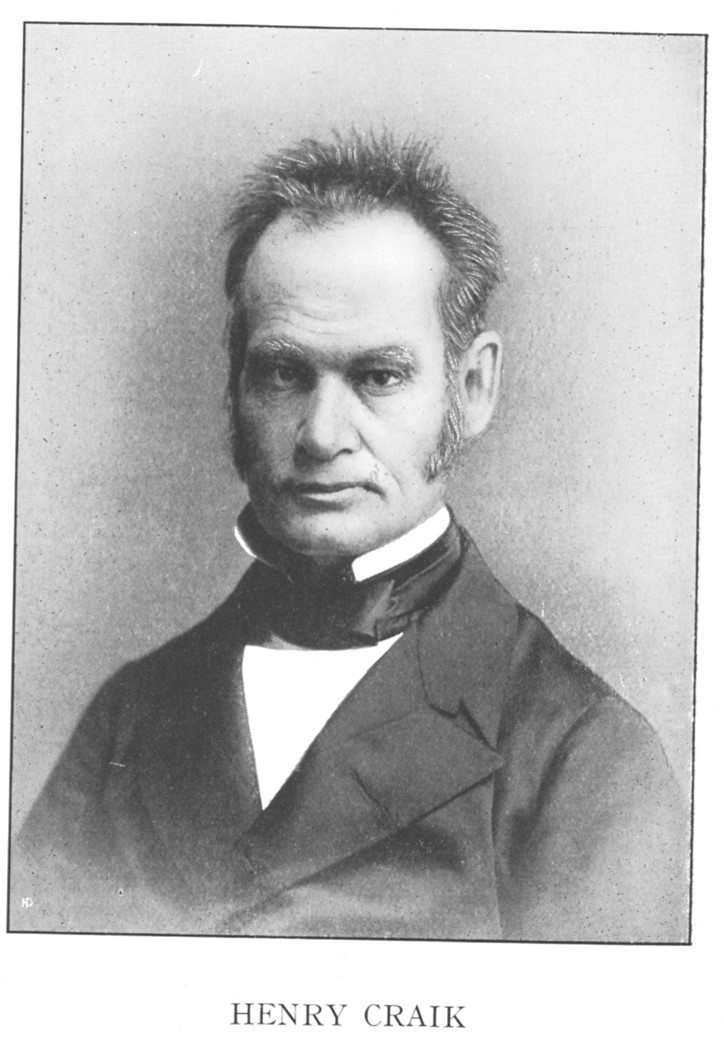
HENRY CRAIK, for forty-four years the beloved colleague in ministry of George Miiller, of Bristol, was born at Prestonpans, East Lothian, on the 8th August, 1805. After a course of instruction in the Parochial School of Kennoway (of which his father was the master), he entered St. Andrews University at the beginning of the session 1820-21, and studied under Professor Alexander and Dr. Hunter. Here he speedily gained distinction for his proficiency in Greek. In an old memorandum book, among other entries is the following from Mr’. Craik’s pen: “1823-1824.-—Attended Greek, Latin, Natural Philosophy, and Dr. Chalmers’ lectures. Obtained a prize in the Latin, and two in the Greek, the highest honour, as before. This concluded my Philosophy course, and qualified me for entering St. Mary’s College, or the Divinity Hall. During all these years I had been living without God, though I read the Scriptures, and kept up a kind of formal praying, as far as I can recollect. My happiness consisted principally in my companionship; but I feel a difficulty in recalling my state of heart, except that I did not delight in the things of God.”
In early days Mr. Craik’s great mental powers made themselves manifest, and his own diary gives evidence of the extensive literary labours to which he devoted himself. It was in the year 1826, and about the twentieth year of his age, that the great spiritual change occurred which resulted in the consecration of his great abilities to the service of his Lord and Saviour. This change he himself especially attributed to the conversation and society of his college companion, John Urquhart. In 1826 Mr. Craik moved to Edinburgh, where for a time he was engaged in tutorial work as well as study, and continued to enjoy the ministry of Dr. Chalmers.
In the month of July in that year he “received a proposal to become tutor in the family of Mr. Groves, a gentleman then residing in Exeter,” the well-known Anthony Norris Groves. This proposal was accepted, and he took up his abode in the family of Mr. Groves, where he remained two years. His admiration of Mr. Groves was very great, and while with him Mr. Craik commenced exposition of the Scriptures in a school-room at Heavitree. His time was now, and for some years onward, fully occupied with classical studies, in which he greatly delighted, and especially in the study of the original languages of the Bible.
In the year 1831 he took up his abode in Shaldon, Devonshire, and became pastor of the Baptist Church there. The same year he was married to Miss Mary Anderson, but after only a few months of married life she was taken from him early in 1832.
Mr. Craik’s first meeting with Mr. Muller took place in July, 1829, at Teignmouth, and thus began the friendship which led on to the association in ministry, and which remained unbroken till death.
In March, 1832, Mr. Craik accepted a pressing invitation to preach in Gideon Chapel, Bristol. Crowds flocked to hear him, and the second Sunday the chapel was crammed. A week later he was joined by Mr. Muller, and the two preached alternately in Gideon, as well as in other chapels in Bristol. There were many striking conversions. On the 1st May, 1832, Mr. Craik and Mr. Muller returned to Devonshire, but soon afterwards the way was made quite clear to return and settle at Gideon Chapel. The conditions on which these servants of Christ consented to settle at Gideon were—That they should be considered only as ministering among the people, and not as occupying any fixed pastoral relationship; that pew rents should be abolished, and that they should go on as they had done in Devonshire in respect to the supply of temporal wants.
Speaking of the removal of these two ministers of Christ to Bristol, Mr. Craik’s biographer says: “If the angels of God have any knowledge, as we may reasonably suppose, of the future consequence of events, they must surely have rejoiced with exceeding joy as they witnessed the arrival of Mr. Craik and his colleague, Mr. Muller, in the ancient city of Bristol; for the former, in the course of a few years, was destined to take his stand among the very foremost of the ministers of the city; to become the friend and correspondent of some of the most able and learned men of the kingdom; an author eminent for his services in the cause of religion, Biblical criticism, and Protestantism, and, what is more, the spiritual father of some hundreds of Christian men and women; while the latter was not only destined to serve the cause of truth by his writings and his ministry of the Word, but, more important still, to become the Founder and Director of the New Orphan Houses on Ashley Down, and also of the Scriptural Knowledge Institution for Home and Abroad.” After coming to Bristol Mr. Craik married a second time, the lady of his choice being Miss Howland.
The ministry begun at Gideon was afterwards transferred to Bethesda Chapel, and a little later Salem Chapel was also rented. In these buildings, for a long series of years, the church continued to grow and multiply, and the “little one became a thousand.”
Mr. Craik was a man of true humility, self-forgetful to a fault, and exceedingly affectionate and approachable. To have known him and enjoyed his ministry is among the most precious memories of the writer. There was nothing heavy about his discourses, but verily they were solid to a degree. He was “mighty in the Scriptures,” and his sermons were rich in expository wealth. One discourse of his would shed light on a large field of Scripture. His sermons on Sunday evenings usually lasted a full hour, but instead of this being a weariness or cause of complaint, it was with regret that hearers observed the approach of the time for closing the service. Rugged and somewhat careless in appearance, a stranger might at first be disappointed, but such a feeling would soon vanish before the outbursts of truly natural eloquence and the glowing fervour which habitually characterised his delivery. His readiness to enter into the spiritual difficulties of any member of the church was a marked feature, and the writer cherishes the memory of one such instance of a special kind, when he not only replied by a letter (which is still preserved), but took up the topic in question on two subsequent occasions in ministry. His removal in 1866, at the comparatively early age of sixty-one years, was an irreparable loss, and the immense concourse at his funeral testified that the loss was felt by the whole Christian community.
J.L.S.

Lewis Sperry Chafer
The Reverend Lewis Sperry Chafer, D.D., Litt. D., was born at Rock Creek, Ashtabula County, Ohio, on February 27, 1871. He was reared in a devout Christian home, his immediate ancestors having been faithful ministers of the gospel.
His father, the Reverend Thomas Franklin Chafer, was graduated during the presidency of Jacob Tuckerman from Farmer’s College, College Hill, Cincinnati, and from Auburn Theological Seminary with the class of 1864. He was born in the year 1829 and died during the fifty-third year of his life, in 1882, when Dr. Chafer was eleven years of age. William Chafer, the father of Thomas Franklin Chafer, and the paternal grandfather of Dr. Chafer, was born in York, England, and moved to the United States in the year 1837, when his son Thomas was eight years of age. He took up residence in the state of Kentucky and was long dedicated to farming in that section of the country.
Dr. Chafer’s mother was Lois Lomira Sperry. She was born at Rock Creek, Ohio, on June 3, 1836, and died in the fall of the year 1915 at the age of seventy-nine when Dr. Chafer was forty-four years of age. Her father, Asa Sperry, was a licensed Welsh Wesleyan preacher, though he was a harness-maker by trade. Ann Sperry, of Irish descent, was the maternal grandmother of Dr. Chafer.
As a boy, Dr. Chafer attended the public schools of Rock Creek until he attained the age of twelve years. After that, from 1885 to 1888, he attended New Lyme Institute of New Lyme, Ohio. There was an orchestra or choral society at that institution and as a young student he was there first introduced to the serious study of music, in which art he became remarkably proficient. Later, when his widowed mother had removed to Oberlin, Ohio, for the education of her three children, as a young man Dr. Chafer attended Oberlin College and Conservatory of Music from 1889 to 1892. It was at Oberlin that Dr. Chafer met Ella Loraine Case, a devoted student of music and a deeply spiritual-minded young lady who later became his beloved wife and faithful lifelong companion and coworker. At this time Dr. Chafer began traveling as a gospel singer with Evangelist Arthur T. Reed. This ministry continued for a period of about seven years, though during that time he was engaged to direct gospel music for other evangelists also. On April 22, 1896, Dr. Chafer was united in marriage to Miss Case whose home was in Ellington, Chautauqua County, New York. She at once took an active part in the ministry to which her husband was devoted, laboring with him as soloist and accompanist at the piano; in both of these services she was exceptionally gifted and thoroughly trained. In 1897, the year following his marriage, Dr. Chafer began his service as an evangelist, ministering in this work until the year 1914 both by preaching and singing. In the year 1900 Dr. Chafer was ordained to the gospel ministry by a Council of Congregational Ministers in the First Congregational Church of Buffalo. In 1903, due to his having taken up residence in East Northfield, Massachusetts, his ministerial relationship was removed to the Presbytery of Troy, New York. At that time Dr. C. I. Scofield was pastor of the Congregational Church of Northfield, which had been organized by D. L. Moody, and there was cemented between the two men a closeness of fellowship in the gospel that grew into an intimate companionship in the teaching ministry which lasted until Dr. Scofield’s death in 1921. When Dr. Chafer moved to East Northfield he began at once his service as music leader, along with Ira Sankey, D. B. Towner, George Stebbins, and others, in the great Moody Summer Bible Conferences. Mrs. Chafer was official organist for the conferences. In the winter Dr. Chafer traveled out of Northfield in an ever widening evangelistic ministry, and his service in the Summer Conferences brought him into close touch with most of the great conservative Bible teachers of that period. In the year 1906 Dr. Chafer moved his ministerial relationship from the Troy Presbytery to that of the Orange Presbytery of North Carolina, and in the year 1916 he himself took up residence in East Orange, New Jersey. Some time after this, after a remarkable spiritual experience in the study of Dr. Scofield in Dallas, Texas, he definitely dedicated his life to an exacting study of the Bible. After an exceedingly fruitful Bible-teaching ministry which took him on repeated occasions to nearly every state in the union, Dr. Chafer removed to Dallas, Texas, in the year 1922, for the principal purpose of establishing the Dallas Theological Seminary. In the year 1924 the school was founded with the cooperation and advice of Dr. A. B. Winchester of Toronto, and Dr. W. H. Griffith Thomas of Philadelphia. Dr. Chafer was President of the Seminary from its beginning until the time of his death.
Dr. Chafer traveled in the ministry of Bible teaching in England, Scotland, Ireland, Belgium, and elsewhere. He always had a great missionary vision and served on various mission boards and visited mission fields in Europe, Mexico, and all of Central America where his counsel and ministry of Bible teaching and evangelistic service were of wonderful benefit to the missionaries and to the national churches.
Dr. Chafer was the author of many pamphlets and magazine articles and of the following books on Bible themes and doctrines: Satan, 1909; True Evangelism, 1911; The Kingdom in History and Prophecy, 1915; Salvation, 1916; He That Is Spiritual, 1918; Grace, 1922; Major Bible Themes, 1926; and The Ephesian Letter, 1935. These books have been before the Christian public in all English-speaking lands for many years and are still in constant and almost undiminished demand. Multiplied thousands have been blessed in spirit, instructed in the grace of God, and confirmed in the faith and in the assurance of salvation by the clear and forceful teaching set down by his able pen. A number of his books have been, or are being, translated on mission fields into several languages; thus a fruitful world-wide ministry has resulted.
From 1940 to 1952 Dr. Chafer was editor of Bibliotheca Sacra, the oldest theological quarterly in America.
The discipline and training which Dr. Chafer received as a background for the writing of this extensive work on Systematic Theology was that of many years of faithful study. In his early years he was known among Bible teachers as especially given to doctrine and was invited on several occasions to become teacher of Bible doctrine in leading institutes of this country.
When he undertook the professorship of Systematic Theology in the Seminary in Dallas, Texas, he at once gave himself to ceaseless study and reading in that division of ministerial training. He secured and became familiar with an exceedingly large library on Systematic Theology. The exercise of teaching this vast field of truth for many years required him to answer practically every question which students of serious mind could ask.
Dr. Chafer himself said that “the very fact that I did not study a prescribed course in theology made it possible for me to approach the subject with an unprejudiced mind and to be concerned only with what the Bible actually teaches.” This independent research has resulted in this work which is unabridged, Calvinistic, premillennial, and dispensational.
In fulfillment of Ephesians 4:8, 11, God gave a beloved “teacher” unto the Church. We are sure that through this treatise on Theology God’s purpose in such a gift, as expressed in verses 12-16, will be further fulfilled to the people of God for immense blessing in “the body of Christ.”
Addendum (Dallas, November 1953)
Dr. Chafer suffered a heart attack in California in the year 1935. Although that stroke was severe, by observing a careful regimen in his convalescence he recovered and gained strength for an active ministry until 1945 when again he was stricken in California. From this attack he did not have a full recovery, but after a period of time he was able to continue his classroom and platform ministry. A third attack in 1948 further weakened him, but he still continued his public work in a limited way until almost the close of his life.
In May, 1952, after his classes were finished at the Seminary he covered the cities in Pennsylvania known as the Harrisburg Circuit of Bible conferences and spoke at commencement and baccalaureate services at Grace Theological Seminary and Columbia Bible College. It seemed to us who were close to him that this pressing schedule with its nighttime train transfers and closely dated speaking engagements overtaxed his scant strength and carried him beyond the point of possible return to his normal ministry.
However, Dr. Chafer had often manifested that he desired to remain active in the Lord’s work until the end. In June, 1952, following his custom in the summer, traveling alone he went to California to visit with friends and to minister with alumni of the Seminary. He reached Seattle and there, after an illness of about eight weeks, he died peacefully on August 22 in the home of his very dear friends, Mr. and Mrs. Robert O. Fleming. A long life of service had come to a close and the servant had gone into the presence of his waiting Lord.
From Systematic Theology. Lewis Sperry Chafer. Dallas: Dallas Theological Seminary, ©1948, renewed 1978.


John R. Caldwell
Chief Men Among The Brethren Biography
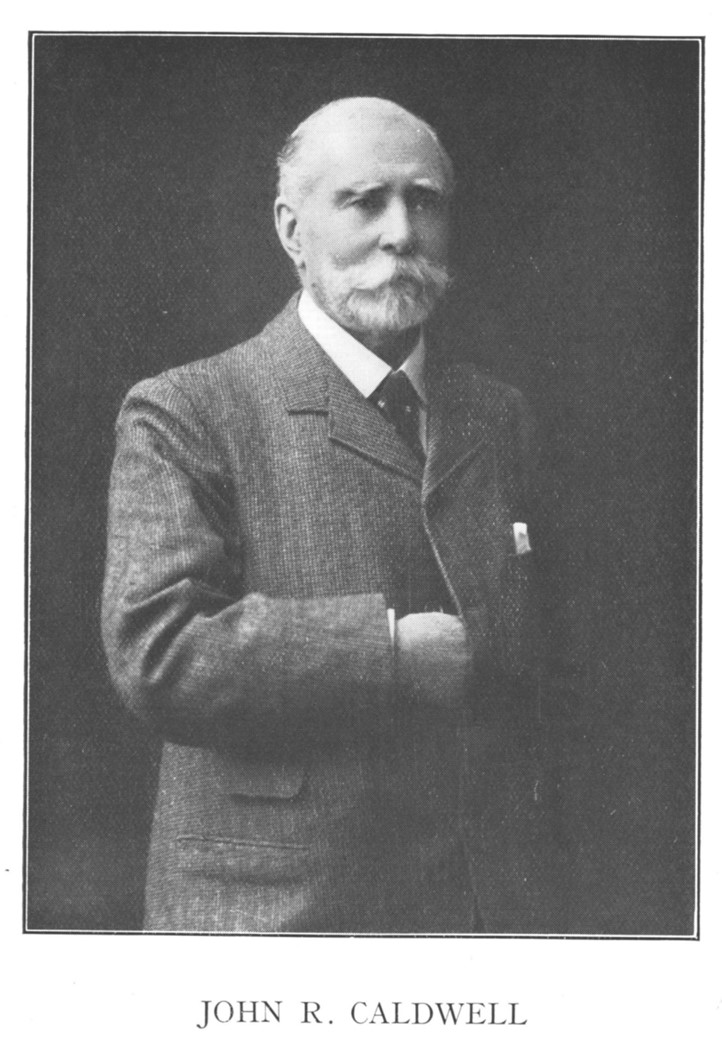
JOHN R. CALDWELL was born in Dublin, on 26th May, 1839, his parents came to reside in Glasgow when he was five years of age, where he was brought up in “the nurture and admonition of the Lord,” his father being a leader in connection with the Independent Church. As might be expected from such surroundings his leanings were ever to the moral and even evangelical side of life. After being interviewed by two deacons, who inquired if he believed in the Bible and the Lord Jesus, he joined the Church, taught in the Sunday School, was a member of the Y. M. C. A., and passed for a Christian by all who knew him.
At this time, in the year 1860, GORDON FORLONG, a well-known gentleman evangelist, was invited by the godly elders of Ewing Place Church to have a series of meetings in the Church, with the result, to use Mr. Caldwell’s own words, “I felt I had not experienced the great change, and at the close of one meeting I waited as an anxious one among many, and heard from John 5. 24 that ‘He that heareth My Word, and believeth on Him that sent Me, hath everlasting life, and shall not come into condemnation, but is passed from death unto life.’ This was indeed good news to me. I heard, I believed, and I had everlasting life. From this time the Bible became a new Book to me, my constant and loved companion. I read it with opened eyes, and beheld in it wondrous things.”
The Revival in the North of Ireland in ’59 created great excitement in Glasgow. Pulpits and platforms of many Churches were opened to laymen as preachers of the Gospel. The old legal ecclesiastical bands were being snapped in many places. The life of the born-again element in Ewing Place seems to have overflowed its bounds. The basement of the Church was utilised by them first for Sunday School work, with considerable success, then having rented the school-room from the managers, they launched out into an Evening Service on definite Gospel lines. This seemed too much for the minister, for however much he had yielded to former efforts, to have a service apart from Church control was too much for him; it must be stopped at once.
Perhaps it was one of the “all things,” for just at this time Mr. Caldwell, Sen., who was feeling the bondage of sectarianism, and Mr. Caldwell, Jun., who in the days of first love was inquiring, “Lord, what wilt Thou have me to do?” got into contact with godly men taking a lead in a meeting emerging from Scotch Baptist lines to what would now be called Brethren lines, though then, as now, a better definition is the “ways that be in Christ” (1 Cor. 4. 17).
Bible readings had been held in the home of Mr. Caldwell. Various doctrines were discussed, and the Scriptures were examined on themes hitherto neglected, with the result that J. R. Caldwell and his friend and partner, Geo. Young, were immersed as believers in Christ.
A transition period of some months at this juncture would be difficult to describe, but it ended in a severance from membership in the Congregational denomination, and an adherence, which was to be lifelong, to meet in simplicity, according to the Scriptures. As he says, “He found there those with whom he had true fellowship, to whom the Word of the Lord was precious and the Name of Jesus sweet. “
A successful business life, a strenuous Church life, and a steady Christian life does not afford points of contrast or scenes of romance to make an enthralling story, yet it would take a volume to speak of the many-sided life of usefulness of such a “brother beloved. ” A few phases must suffice.
MINISTRY OF THE WORD may be mentioned first, as his name will be remembered by thousands of the Lord’s people in all parts of the earth who had the privilege of hearing Mr. Caldwell speak. In the morning meeting, at which he ministered only at intervals, the Word was sweet, short, Christ exalting, and worship producing. In the Sunday School, in the Gospel meeting, at the street corner, the message was quietly and reverently listened to. But his forte was ministering the Word to the saints in the continued exposition of a book—Leviticus, Corinthians, Thessalonians, and Hebrews being his favourites—or in a series of addresses on the Offerings, Old Testament Characters, God’s Chosen People, Christian Duties, or similar themes; or, as was much more common, in a helpful message from the portion of Scripture or theme which had formed his private meditation during the preceding days.
His notes were merely small slips of paper with the headings and the abundant references to which he asked his hearers to turn in the course of every address. He kept scant record, if any, of where and when he had given certain addresses, and felt quite free in repeating a message if suited to the hearers. “The Red Heifer” and “Kinsman-Redeemer” were favourite subjects on which he spoke many times. “God our Father,” “The Love of God,” “The Church,” and “The Lord’s Coming,” will be remembered by many as others which flowed in freshness from heart to heart.
His WRITINGS took up a great part of his time when not occupied with the extensive business of Caldwell, Young & Co., Silk Merchants, of which he was the head. One of his warmest books is “Things to Come, ” written in early Christian life, concise and up-to-date even to-day, put third on the list of “Best Books on the Signs of the Times,” by Dr. Torrey, of Los Angeles, Cal. His other books, “God’s Chosen People,” “Shadows of Christ,” “Christ in the Levitical Offerings,” “Earthly Relationships, ” “Because Ye Belong to Christ,” and other subjects, have edified many. His volumes of Exposition of the Epistles to the Corinthians, first given as Addresses to audiences of 600, on Sunday afternoons, latterly issued under the title of “The Charter of the Church,” will long remain standard volumes of exegesis on the Church Epistles. Many smaller books and pamphlets, Gospel tracts, and almost innumerable magazine articles, always manifesting care in preparation, moderation in statement, and aiming at the definite spiritual profit of the readers, flowed from his busy pen during the long period of close on sixty years of Christian life.
As COUNSELLOR his advice was sought by brethren of high and low degree in all parts of the world. It was ever freely given, either with quiet deliberate voice or concise yet clear pen. The extent and value of this service will only be rightly assessed at the Day of Recompense.
His LIBERALITY, which none would have dared to speak about in his lifetime, cannot even now be told, because he strictly followed the Scriptural injunction: “Let not thy left hand know what thy right hand doeth” (Matt. 6. 3). An earnest advocate of “systematic giving, ” which in his position meant a liberality considerably above what most would judge.
SOUND DOCTRINE ever found in Mr. Caldwell a loyal adherent and faithful advocate. From “Higher Criticism,” the New Theology, and much of the modern familiarity with Bible truths and doctrines his spiritual instinct revolted. More than once in the pages of The Witness, which he so ably edited from 1876 to 1914, he reiterated his adherence to the fundamentals of the faith. The statement at the close of 1910 is typical. It reads: “Whilst not claiming infallibility, we rejoice to believe that a steadfast testimony throughout has been maintained concerning the fundamentals of the faith, including the plenary and verbal inspiration of the Scriptures, the perfect humanity, essential Deity, glorious work and worth of the Lord Jesus Christ, the utter ruin of man, necessity and sufficiency of the atonement, present possession of eternal life by the believer, the priesthood of all saints, the oneness of the Body of Christ, the immersion of believers as being the Christian baptism of the New Testament, the weekly ‘breaking of bread’^ as the privilege of all the children of God, separation from the world and its associations, gathering together in the Name of the Lord apart from sectarian titles and clerical assumption, the personal and pre-millennial Coming of the Lord as the ‘blessed hope’ for which we wait, the eternal conscious punishment of the impenitent, and the eternal blessing and glory of the saved.”
Continuing, he added: “It may be well to make clear our position regarding the somewhat vexed question of ‘the fellowship of saints.’ Apart from a period of some years, from 1876, during which the Editor was induced to advocate narrow views concerning assembly fellowship, The Witness has continued to advocate the reception of all those who are (1) truly ‘born again,’ (2) sound fundamental doctrine, and (3) godly in walk. Such was the practice of ‘beloved brethren’ of early days, and such the ministry by tongue and pen of many of our honoured contributors now with the Lord.” To such teachings he held tenaciously to the end.
The first real signs of closing years were manifest in 1905. Before leaving for France, fifty-two brethren, thinking they might not have another occasion, desired to confirm their love and return thanks for the help received, met Mr. Caldwell in a room of the Christian Institute on Monday, 20th November, 1905. His health steadily failed, and latterly he was as a child resting in the bosom of his Father God, till without a murmur during all the weary months of pain and weakness he quietly fell on sleep on Lord’s day morning, 14th January, 1917, to awake in
His likeness on the morning of the Resurrection.
HYP.

Clarence Larkin
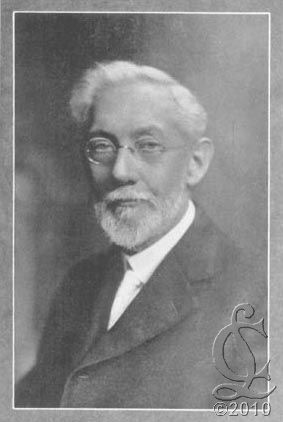
American Baptist pastor, Bible teacher, and writer, Clarence Larkin was born October 28, 1850, in Chester, Delaware County, Pennsylvania. He was converted to Christ at the age of 19 and then felt called to the Gospel ministry, but the doors of opportunity for study and ministry did not open immediately. He then got a job in a bank.
When he was 21 years old, he left the bank and went to college, graduating as a mechanical engineer. He continued as a professional draftsman for a while, then he became a teacher of the blind. This last endeavor cultivated his descriptive faculties — something God would later use in him to produce a monumental work on dispensational theology. Later, failing health compelled him to give up his teaching career. After a prolonged rest, he became a manufacturer.
But he was not happy. He felt that God wanted him in the Gospel ministry. When he was converted he had become a member of the Episcopal Church, but in 1882, at the age of 32, he became a Baptist and was ordained as a Baptist minister two years later. He went directly from business into the ministry.
His first charge was at Kennett Square, Pennsylvania; his second pastorate was at Fox Chase, Pennsylvania, where he remained for 20 years. He was not a pre-millennialist at the time of his ordination, but his study of the Scriptures, with the help of some books that fell into his hands, led him to adopt the pre-millennialist position. He began to make large wall charts, which he titled, “Prophetic Truth,” for use in the pulpit. These led to his being invited to teach, in connection with his pastoral work, in two Bible institutes. During this time he published a number of prophetical charts, which were widely circulated.
When World War I broke out in 1914, he was called on for addresses on The War and Prophecy. Then God laid it on his heart to prepare a work on Dispensational Truth (or God’s Plan and Purpose in the Ages), containing a number of charts with descriptive matter. He spent three years of his life designing and drawing the charts and preparing the text. The favorable reception it has had since it was first published in 1918 seems to indicate that the world was waiting for such a book.
Because it had a large and wide circulation in this and other lands, the first edition was soon exhausted. It was followed by a second edition, and then, realizing that the book was of permanent value, Larkin revised it and expanded it, printing it in its present form. Larkin followed this masterpiece with other books: Rightly Dividing the Word, The Book of Daniel, Spirit World, Second Coming of Christ, and A Medicine Chest for Christian Practitioners, a handbook on evangelism.
Larkin, a kind and gentle man, deplored the tendency of writers to say uncharitable things about each other, so he earnestly sought to avoid criticisms and to satisfy himself with simply presenting his understanding of the Scriptures. Though he did not intend to publish his own works, the Lord led in that direction. During the last five years of his life, the demand for Larkin’s books made it necessary for him to give up the pastorate and devote his full time to writing. He went to be with the Lord on January 24, 1924.

Northcote John Deck

DECK, (JOHN) NORTHCOTE (b. Norwood, London, England, 12 March 1875; d. Toronto, Canada, 10 May 1957). Missionary doctor and teacher.
Northcote Deck was the second son of Dr John Feild Deck and his wife Emily (née Baring Young). He came to Sydney from New Zealand with his parents in 1877 when J F Deck established the Sydney Homeopathic Hospital at Ashfield, then a wealthy suburb, and studied medicine at Sydney University. In 1908, he visited the work in the Solomon Islands of the SSEM conducted under the aegis of his aunt Florence Young (q.v.), and joined the Mission. For the next nineteen years, he served as the SSEM’s first medical missionary, travelling among the islands of the Solomon group in the mission’s vessel Evangel. Florence Young wrote that Northcote Deck ‘threw himself heart and soul into the work. He took full charge of the vessel, and as Captain, engineer, photographer, explorer, doctor and visiting missionary and teacher has done work of untold value … The moment the anchor is dropped there follows the important and strenuous work of visiting the out-station schools to instruct encourage and guide the native teachers.’ To the islanders, he was ‘Liutasi’ – the man who goes everywhere. In 1910, he became the first white man to cross Guadalcanal, notoriously hazardous tor whites since the depredations of the blackbirders. The next year he recovered the skulls of an Austrian party which had been wiped out in Guadalcanal some years before. These exploits, performed at such obvious peril earned Deck the Fellowship of the Royal Geographical Society.
He assisted in the establishment of an outpost at the more remote Rennell Island in 1910, and on returning a little later, was horrified to find the bones of the three native teachers. They had been killed, it appeared, to obtain the nails with which the mission house had been constructed, to use as fish hooks. Writing in 1945, Northcote commented of this set-back, ‘at the time the whole tragedy seemed like defeat. In the light of subsequent events it was only victory deferred’. However, Rennell Island remained closed tor many years thereafter; the government forbade the establishment of a mission station until 1934, a policy with which Deck reluctantly concurred.
He m. Jessie Gibson on 19 April 1911 while on deputation work in Dunedin, New Zealand his parents’ home town, where the mission had a Council of Advice; there were no children. After Jessie died of Blackwater fever in 1921, Deck m. in Oct 1923 his step-cousin Gladys Deck, from Motucka, New Zealand, who had arrived in the Solomons earlier in the year, a daughter and a son were born to them. The losses of his first wife and aunt strengthened Deck’s utter commitment to the Lord’s work.
Following Constance Young’s death in 1924, he wrote, ‘we are here to glorify God every day and night, and anything which does not do that must go’. Though Florence Young was the founder and undoubted leader of the SSEM, her nieces and nephews, members of the Deck family, were among its key members in the field for most of the first half of the 20th century. Seven of the eleven children of John and Emily Deck became missionaries: five with the SSEM and two with other missions, most of them for long periods. All had drunk deeply at the fountain of their parents’ faith and piety, solidly based upon Bible study, so characteristic of the Brethren of that period. The seed thus sown bore fruit as the years went by, with the establishment of a strong indigenous church in the Solomons.
Deck’s quarterly letters describing his missionary journeyings had an apostolic quality, and gained a wide circulation, 2000 copies being printed in the 1920s. Like St Paul, he was in danger often, and was no stranger to suffering. He also produced a number of devotional works and accounts of the work of the SSEM, and lived to see the fruit of his labours and those of his fellow workers. Despite the desperate battle for Guadalcanal in 1942, one of the fiercest conflicts of the Pacific theatre of World War Two, the work of the mission was unharmed, and continued to grow in subsequent years.
He left the Islands in 1928, and settled in England for 10 years before moving to Canada. He had a warm and generous personality, and an uncommon gift of combining gentleness and authority as a public speaker: his words were with power. He was a sought-after speaker at conventions, and was an active board member of Christian organisations. Naturally, he maintained a keen and prayerful interest in the work which he had done so much to establish.
A Griffiths, Fire in the Islands! (Wheaton, 1977); F S H Young, Pearls From the Pacific (London, nd, 1925.)
SELECT PUBLICATIONS: J N Deck, South from Guadalcanal: the romance of Rennell Island (Toronto, 1945)
STUART BRAGA

Edward Dennett
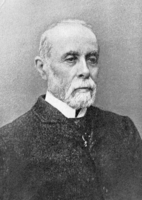
EDWARD DENNETT was born in the Isle of Wight, 1831, at Bembridge, and died in Croydon in Oct., 1914 after a short illness. His people were all in the Church of England, but he was converted as a lad through the instrumentality of a godly clergyman, and he left the church from conviction and became minister of a Baptist Chapel in Greenwich, having previously matriculated at London University.
In 1873 he contracted a severe illness through visiting one of his parishioners, and was sent abroad for a year by his people. He wintered at Veytaux, and coming in contact with ´brethren´ staying at the same ´pension´, he had a good deal of intercourse with them, which helped to clear in his mind certain difficulties that he had.
Taking no steps till his return, he explained his views and resigned his charge. Shortly after ´breaking bread´ for the first time with those gathered simply at the Lord´s table “unto His Name”.
Mr. Dennett had the pen of a ready writer. His sphere of labour was England, Ireland, and Scotland, and he paid visits to Norway, Sweden, and America. He had pastoral and teaching gifts of a high order.

Ingimar DeRidder
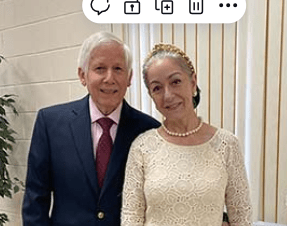
we can testify that God is Good and God is Faithful
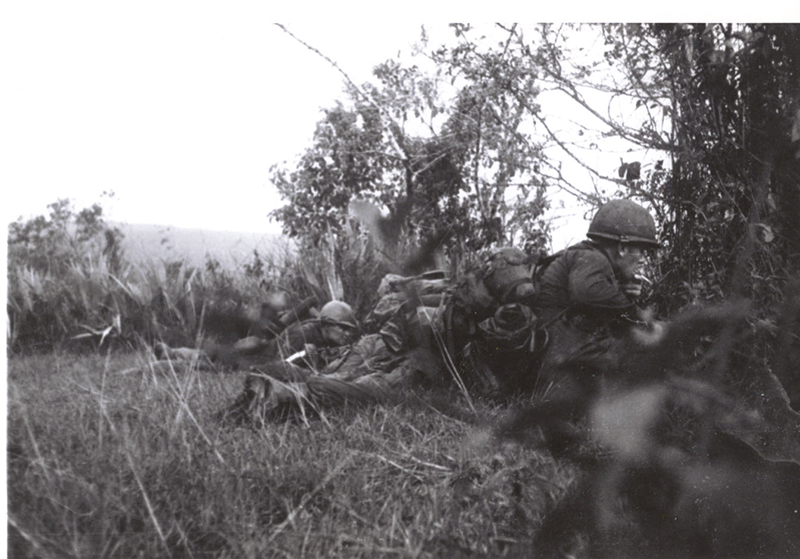
Sometimes we have to get in a quagmire before we look up. George Bush, Bill Clinton, Donald Trump, and I were born in the same year, 1946. Some of us became famous, but not all of us. We were part of a tumultuous generation called the Baby Boomers. Like every generation, we were a generation of Seekers. Many set out, to “find themselves,” but never came home. I, like the Prodigal Son, learned some things the hard way and found myself in a “far country.” In 1966, at the ripe old age of twenty, I found myself in the middle of a war zone where I was a MACV combat photographer. The truth is, we all lost our way. At least that’s what the Bible says. Vietnam was bloody and a muddy mess. God used that experience to help me, like the Prodigal, come to my senses. No one comes to God until they first come to themself. Reading the Bible, I came to see that my problem and the world’s problem were related. We both had a sin problem. We were both at war with God. Now, that’s a war no one can win. The good news I heard was that Jesus Christ died on the cross to save me from sin and to lift me out of the miry clay and set my feet upon the solid rock. I knelt by an army bunk bed and basically waved a white flag of surrender to God. From that moment the war was over, (at least in my heart) and there was peace.

For fifty years I have simply tried to share the message of Jesus Christ with other seekers. I have tried to explain to every seeker that Jesus is the Way, the Truth, and the Life. Jesus is still the hope of the world. The materials found here are things I have learned along the way. Today, a new restless generation is seeking their own identity (ID), and trying to change the world. My prayer is that something I have said will help someone find peace in Jesus Christ, the Prince of Peace. “Thou wilt keep him in perfect peace, whose mind is stayed on Thee: because he trusteth in Thee” Isa.26:3
Ingimar DeRidder
(Above Photo: Charlie Company 2nd 327 101st Airborne Div 1967)
“He brought me up also out of an horrible pit, out of the miry clay, and set my feet upon a rock, and established my goings. And he hath put a new song in my mouth, even praise unto our God…” Ps. 40:2-3

John Trew Dickson
I could not find any information on this author. He wrote many biographies of other authors, and I have 60 videos of his writings. See the playlist button on this author. He was part of the Brethren, but that is all I know about him.

William John McClure
Born: 25th December 1857
Died: 6th December 1941

John Trew Dickerson wrote a Biography of William John McClure. Here is his book in video format.

Neil Dougal
Sorry, I can’t find any information on this Author. He was part of the Brethren, but that is all I know about him. Got this from Kevin Gull on Facebook: Neil Dougal was active in the Toronto area in the 1970s and earlier.

Cyril H Brooks
Cyril H. Brooks was an English open brethren pioneer assembly planter who served in the Philippines. He was born Dec. 11, 1898 in Lingfield, Surrey, England, a son of Harry Brooks (1861-1905) & Ellen Sheldon Brooks (1863-1926). On Sept. 20, 1922 he married Anna Rose Carson in Buffalo, New York where she was raised, although born on May 2, 1898 in Belfast, Co. Antrim, Northern Ireland. Cyril died in March of 1986 in Manila, and Anna followed in May of 1986.

Art Farstad
Eulogy for Dr. Arthur Leonard Farstad
September 1, 1998 by GES Webmaster in Journal Articles

This is the actual eulogy delivered at Dr. Art Farstad’s funeral on September 4, 1998 at the Mitchell Ministries Center at Dallas Theological Seminary. Nearly 200 people gathered from all over the U.S. to remember and honor Art
FRANK D. CARMICAL
Evangelist
Harvester Ministries
Plano, TX
The first time I ever heard the name of Arthur Farstad was in 1980 in the old Wyatt’s Cafeteria on Abrams Road in Dallas, sitting across the table from Jim Mook. I was a lowly Master’s student and Jim was in the doctoral program at Dallas Seminary. I remember sitting enthralled as Jim told me how he actually lived in a big house in Lakewood edition with Dr. Arthur Farstad, who had been a Greek professor at DTS for five and a half years and was at that time Executive Editor of The New King James Version of the Bible.
Wow, I thought. Jim actually lives with this famous guy (even though I’d never heard of him)! Little did I know that in two years I would not only get to meet this famous “Dr. Farstad” (at a Christmas party where we all baked and decorated gingerbread men cookies, no less!), but I would also gain the richest and best friendship I’ve ever had.
Arthur Leonard Farstad was born on March 7, 1935 in Yonkers, New York (the seventh day of the third month, interesting because Art’s favorite numbers were three and seven). He was the youngest of three boys. Art went to be with his Lord at sixty-three years of age on Tuesday evening, September 1, 1998 in Dallas. That same morning, Art commented to me as I drove him to Baylor Hospital: “I came to Dallas on this day thirty-five years ago from Washington D.C.; perhaps today is the day I’ll go home.”
When Art exited the stage of planet earth, he left a family he loved and prayed for every day of his life: his two brothers and sisters-in-law, Dick and Jane Farstad of Garland, Texas and Arnold and Jan Farstad of Boulder, Colorado; and six nephews and nieces, with their respective spouses and children, Mark Farstad, Martha VanDenHeuvel, David Farstad, Debbie Meyers, Eric Farstad, and Sharon Scanlon. Art also left behind across this world a host of former students, associates, and devoted friends.
He earned degrees and received many honors from Emmaus Bible School, Washington Bible College, and Dallas Theological Seminary. In addition to his translation work on the nkjv and his editorial work on The Majority Text of the Greek New Testament, Art was also a founder of the Majority Text Society, editor of the Journal of the Grace Evangelical Society, and translator and general editor of a new translation of the New Testament called Logos 21.
Although Art did not complete that translation, he did finish the Gospel of John, which has been published as an attractive blue (his favorite color) evangelistic booklet. There, in the foyer of the auditorium, are copies of this booklet. If your family does not already have one, you would honor Art’s memory by taking a copy with you. And of course, they’re absolutely free! When you’re finished reading it, please honor the Lord by giving it away to someone who needs to believe that Christ died for our sins and arose and who needs to receive eternal life, free of charge.
Late Tuesday afternoon, Art’s oldest brother Dick read in Norwegian from John 14 to Art in his room at Baylor Hospital. I’d like to read from Logos 21 Gospel of John, 14:1-2, the last verses that Art heard before his death:
Do not let your heart be distressed. Believe in God; believe also in Me. In my Father’s house are many homes, otherwise I would have told you. I am going away to prepare a place for you.
Just five days before his death, Art read those same verses in Norwegian and noticed that the Norwegian word for “Father” in verse two was “Far,” and the word for “place” in that language was “sted.” Art circled both words in his New Testament: “Far,” “sted,” drew a line between them, and commented that “Father’s place” in Norwegian was “Far-sted,” like “Farstad!” Art concluded that perhaps the Lord was calling him home.
That story is so typical of Art. He was an individualist, walking to the synch of a different percussionist. He had his own unique style and flare to life. I often kidded him about being a seminary prof and Bible translator and yet having an interest in the macabre. Art was an aficionado of the Lincoln assassination, the Lizzy Borden ax murders, Jack the Ripper, and the Lindberg kidnapping. Art was a Titanic buff long before it was cool to be a Titanic buff. And who could forget his interest in Sherlock Holmes and the mysteries of Dorothy Sayers and Agatha Christi? If Art were here right now, he would point out that the name “Agatha” comes from the Greek word that means “good.”
Anyone who ever talked to Dr. Farstad for more than five minutes was soon to be acquainted with the “art” of conversation. He was a man of such ideas and ideals, a veritable Funk and Wagnalls of culture and trivia, that to chat with him for an evening was like a crash course in the liberal arts with running footnotes!
No one who knew Art or heard him teach can forget his marvelous sense of humor and wit, his puns and asides. When forced to endure someone’s absurd or inane, world-without-end prattle, Art would turn his head to one side and roll his eyes toward Heaven. Does anyone recall how he would rhapsodize about the ecstasies of Belgian chocolates or repeat for the umpteenth time his lecturette on the origin of the word chocolate? “Theobromide: the food of the gods!”
And of course, most hilarious of all was his own idiosyncratic argot devoted exclusively to his beloved Welsh Corgy, Mr. Chips, or Chippy, as he was affectionately called. Art also created the world’s only free, informal, evening school in his home, dedicated to the study of any subject, with its mascot his pooch. He called it CDU: Chippy Doggy University. After he met me, Art was quick to point out that I should be honored to have the same initials as Chippy—mine are FDC and his were CDF: Frank Daniel Carmical and Chippy Doggy Farstad!
Art was an old-fashioned bachelor and gentleman. His interests ranged from classical music to the Olympics to handwriting analysis to roses. He was an artist and a scholar, a modern Renaissance Man, with the mind of a genius inventor, the heart of a medieval romantic, and the soul of a metaphysical poet. Who else, but a man with a boylike faith and walk with God, would never skip his morning quiet time, and yet read those daily devotions alternately in English, French, Latin, Norwegian, Greek, or Hebrew? We shall not see his like again.
On the morning of the day of his death, lying on his hospital bed, Art asked me for his Norwegian New Testament and read the last verse that he was ever to read on this planet, 1 Cor 2:9. I read from his well worn, teaching copy of the NKJV:
Eye has not seen, nor ear heard, nor have entered in the heart of man the things which God has prepared for those who love Him.
When I think of Art, it reminds me of what God can do with one life dedicated to Him. Art’s ministry extended to countless lives through those he taught and touched, who in turn have passed on that special torch to new generations. The proof of that is shown in this service by those who have traveled here from across the United States just to honor him.
Over the years, Art opened his home to seminary students, usually young single men, for whom Art was a role model of scholarship, professionalism, character, and moral purity. Those men have gone on to become professors, missionaries, and ministers scattered around this globe. And like the Lord Jesus Christ, Art was a mentor and discipler not only of men, but also a teacher of women, whom he held in high regard, especially his mother, his sisters-in-law, his secretaries, and special friends like Mrs. Winifred Griffith Thomas Gillespie.
Art was more than a friend to me; he was like a father I never had. And though I loved him and looked up to him, I was never blind to his frailties and shortcomings. He ate too much; he didn’t get enough exercise; and he didn’t take care of his health like he should have. He was a procrastinator and super disorganized. His favorite encyclopedia, Larousse, could have used Art’s office as an illustration of the word pile! But those foibles are all like the muted colors in the corner of a canvas of life painted from top to bottom and side to side with the blazing primary hues of his strengths and virtues.
Why was Art the great man that he was? What can account for such an amazing life? I’ll tell you. It was God’s work, through His Holy Spirit, conforming Art’s life and heart to the character and image of Jesus Christ, even as Art first trusted in Christ as his Savior and then throughout life, made it a habit to respond in faith and obedience to God’s Word.
Only Jesus, in and through Art’s life, can explain his actions. I never saw Art angry, except against sin or injustice or apostasy from the faith. He had an amazing degree of patience and compassion with the unlovely and unloved. I remember so many times, when others would use, abuse, or accuse Art, how I would seethe with anger, ready to throttle them, and he would simply turn the other cheek and look for the best in them, minimizing their weaknesses and maximizing their strengths. If ever I saw God personify First Corinthians 13 in mortal flesh, I witnessed it in Art:
Love…bears all things, believes all things, hopes all things, endures all things. Love never fails.
Art was also a great man because he had godly parents, who from his childhood instructed him in the faith. Art was so proud of his parents who came to America as immigrants, became citizens, and saw their three sons grow up to be educated and have a better life than they. It’s fitting that on his lapel here in the casket he wears a tiny Norwegian flag in memory of his folks. His casket is made of beautifully polished wood, appropriate because his dad was a carpenter.
Finally, Art was a great man because God gave him an exceptional circle of Christian friends who constantly lifted him up in prayer. Some pretty famous people, in this world and in the next, crossed Art’s path and left their mark upon him so he in turn could imprint his life on others.
I know how difficult this is for many of you. Me too. He’s gone. It seems so unfair that he was ripped out of our lives so suddenly, leaving us never to see him again in this life. We don’t even know why he died yet. We will grieve. But that’s okay. It’s right to mourn our loss, but we also have a responsibility to celebrate Art’s gain. There is so much to be thankful for in his home going:
- Art is with Jesus!
- He’ll never suffer with his heart or surgical pains again.
- He didn’t linger a long time in disability or indignity.
- His disciples and students are teaching and winning thousands.
- His translations and writings are impacting millions.
- We Christians will meet Art again in oh, such a short time really.
- And even in his departure—such victory! On the morning of the day of his death Art said to me, “Maybe I’ve come back to the hospital so my doctor will gain assurance of his salvation.”
But we must not only celebrate Art’s gain, but our own gain as well. Whether your time with him was little or much, measured in months or years, rejoice that God loved you so much that He gave you the inestimable privilege to have your life journey intersect that of this remarkable man. Give praise to God that He enriched you and touched you through the words and works of His servant Art. I’m not sad that I’ve lost him. I’m so happy and blessed and thrilled to have had him in my life for fifteen wonderful years.
My mom told me yesterday that she had this picture in her mind of Art arriving at the gates of Heaven and Jesus welcoming him inside. And after hearing Jesus’ words and seeing His face, Art then hears near Jesus’ nail-pierced feet a familiar sound of padded paws, a jingle, a bark, and Chippy’s chiming in: “Welcome home.”

Franklin Ferguson
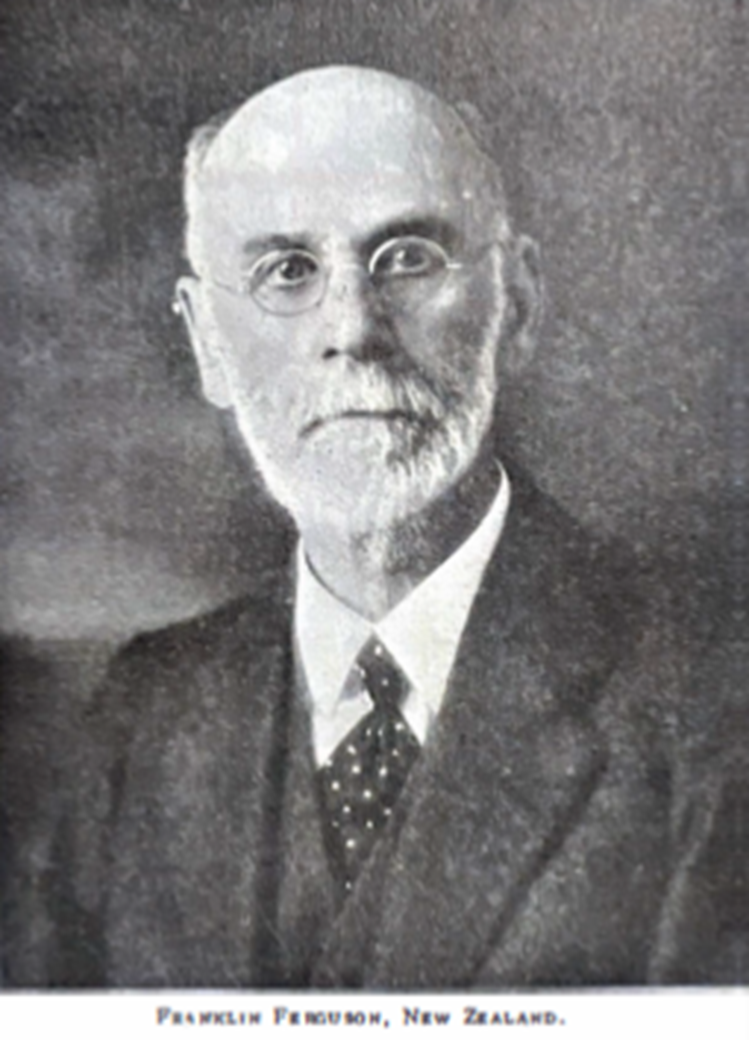
FRANKLIN FERGUSON passed peacefully into the presence of the Lord on September 21st, 1957. He was born on November 22nd, 1866, and saved by God’s grace on October 31st, 1881, near Manchester. He arrived in New Zealand on February 13th, 1883, and lived in Napier until 1897.
The following is his own account, left on record, of his call to service for the Lord, whole time:
“On December 24th, 1897, I went forth to devote my whole time to the Lord, for His service. The following Scriptures were those which He used to exercise my soul in taking this step:
First, Deut. 1. 6-8, in 1892, while I stood on the hill-top of Napier, surveying the vista stretching far away to the south.
Then Psalm 37. 3-7, during a five years wait, till home responsibilities were lifted of God.
Next, Psalm 78 19-41, when the way had cleared. Oh! how my soul was searched! but faith triumphed.
Afterward, 1 Cor. 7. 32-35, after home matters had been wonderfully met, to set me free.
Finally, Psalm 119. 49, as I left all behind for the new path on December 24th, 1897.
Later on, Psalm 119. 65, as, one day reviewing the way I had taken. A stay—Isaiah 26. 3 has been a wonderful support all through the years.
Conclusion: Joshua 23. 14.”
Our dear brother has kept an even path in godly sincerity and humility of mind and singleness of purpose all the way, and a sweet odour has spread, wherever his name has been known; his gentlemanly gracefulness has balanced becomingly with his faithfulness to God. He has been much used of the Lord, first in planting and nourishing the early assemblies in New Zealand and for years, in the editing of “N. Z. Treasury” and fostering missionary interest; also in much written ministry to various magazines, declaring all the counsel of God. How many of us look back with gratitude to God for the help he was to us in our early years in the faith. We have learned to highly regard him for his upright and devoted life, and his prayerful counsel.
In 1907 he married Miss S. A. Graham in Dunedin and they helped each other in the Lord, till February 27th, 1947, when his loved wife was taken home to glory. From this time, firstly, from the suggestion of his wife and her encouragement, he published the several books of written ministry, which have been so marvellously used of God in many countries and languages, the quest for which continues unabated, along with many expressions of blessing and help received. To distribute these freely was our brother’s overflowing joy. Occupied with despatching further supplies on September 10th, he took a faint turn and fell from his chair; from this day, extreme weakness persisted, with lack of appetite, yet he was happy in soul, filled with thankfulness and rest in the Lord. His mind was clear, and it was delightful to listen, as, filled with the Scriptures, his “heart was inditing a good matter.”
On the morning of the 21st, he woke freshly. Mrs. James had devotedly cared for him for some time, and this morning, as she brought him a little food, was greeted with a bright “good morning,” the first since his fall on the 10th. On returning shortly, she found him sinking into a coma and quickly called a few nearby believers. As we watched around him, a sister drew a promise from a box on the dresser and it read, “His left hand is under my head and his right hand doth embrace me” (S. of Sol. 2. 6), and the sweetness of it filled our souls. The doctor came, but in a little while our brother was with the Lord. We knelt together to thank Him for the long life that had so consistently expressed: “For to me to live is Christ and to die is gain” (Phil. 1. 21). What a debt we owe to the Lord for this fragrant, devoted, exemplary life, the key of which was godly simplicity. The great joy he so often spoke of was now his portion: To see Him. To be with Him and to be like Him. May we be moved afresh to follow his faith.
Our brother’s body was laid in the Palmerston North Cemetery on September 23rd, after a service in the Terrace End Hall, and in the presence of a large number of those who had learned to love him much in the Lord. Some had come from far to show their deep regard for a true “father” in the faith. We think of his welcome in the “Glory land.”
To God be the glory.
Saved for the day of glory.
Redemption’s song to sing,
Still of the blood of Jesus.
Loudly our praise will ring.
Saved now to wait with patience,
Looking by faith afar,
Till just before the dawning,
Rises the Morning Star.
(Light and Love, 805. Sung at the funeral).
Mr Ferguson was a contributor to The Believer’s Magazine over a very long period, and many readers were helped by his faithful and pithy written ministry. To us the word is. “whose faith follow.” Ed.
“The Believer’s Magazine” 1957.

Edwin Fesche, 98, preacher who taught at Bible school
Edwin Fesche, an itinerant preacher who set up a microphone and speakers on Baltimore street corners, died of pneumonia Sunday at Burdette Tomlin Memorial Hospital in Cape May Court House, N.J. The former Waverly and Westminster resident was 98.
A member of the Plymouth Brethren, he often preached at Loch Hill Chapel on Loch Raven Boulevard and taught at the Baltimore School of the Bible in Bolton Hill. He handed out religious tracts on the streets of Baltimore and other East Coast cities in his 70 years of public preaching.
Born Edwin Claude Alexander Fesche in London, he was raised in the city of Eastbourne, on the English Channel. Family members said its location contributed to his lifelong love of the sea. He recalled the early days of World War I, when he was 10 and saw wounded soldiers returning to England and being cared for in seaside hotels and schools used as hospitals. Family members said the war and the Depression of the 1930s shaped his outlook on life.
He left school at age 14 and joined the British merchant marine. He sailed a square-rigged schooner and traveled between Buenos Aires, Argentina; Australia; and Bordeaux, France.
“His ship had no other propulsion but the wind,” said his son, Dr. Marshall Fesche, a Westminster dentist. “He made the three-month trip without any outside communication, a doctor, electricity or a refrigerator. And he loved it and always talked about the seas. When the Tall Ships visited Baltimore, he’d go down to the harbor and walk through them.”
At 20, Mr. Fesche jumped ship in New York City and joined the U.S. Army – using the name Edward Fish. He served in a coast artillery unit at Fort Hancock, N.J., that guarded the entrance of New York’s harbor. While in the service he joined the Pocket Testament League, a society whose members distribute Christian pamphlets. He studied three years at the Philadelphia School of Bible.
He sailed on transports to Panama, Hawaii, the Philippines and Shanghai as a federal civilian employee in the 1930s, and paid an $8 head tax to enter the United States legally. Mr. Fesche gained his U.S. citizenship in 1937, about the time he joined the Plymouth Brethren, a group founded in Plymouth, England, to spread the gospels.
He moved to Baltimore during World War II and bought a rowhouse on East 34th Street in Waverly. He preached at the Arunah Avenue Gospel Hall in West Baltimore and later at Loch Hill Chapel. He taught biblical history at the Baltimore School of the Bible in the 1700 block of Park Ave.
Every Sunday afternoon for many years, he carried a microphone and speakers to the Harford Road side of Clifton Park, where he attracted a small band of listeners. He also preached on Baltimore Street.
In one of his early preaching sessions, on a visit to Baltimore, he met his future wife, the former Garland Whitfield Topp. They had been married for 60 years when she died in 1996.
“He supported himself on goodwill offerings from the different assemblies where he preached along the East Coast,” Dr. Fesche said. “He might get a used car for $200 or be given clothes. We were never wanting, but when I did my father’s taxes, I could see how little he made. Somehow, he made it all work.”
Family members said Mr. Fesche canned peaches, made his own applesauce and bottled root beer. He never drank alcohol and often rode a beat-up bicycle on his visits to shut-ins and the sick. He transported his groceries in saddle bags mounted to the bike.
To save money for a visit to England to see his siblings, he became a crew member on a freighter in the 1950s and 1960s.
Plans for a memorial service were incomplete.
He is also survived by another son, Dr. P. Hudson Fesche of Hilton Head Island, S.C.; a sister, Muriel Hodges of Bath, England; four grandchildren; and two great-grandchildren.
More obituaries, next page
Originally Published: February 11, 2003 at 12:00 AM EST

George Ferrier
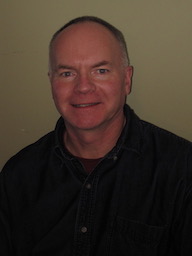
George Ferrier was born and raised in Canada where he had the privilege and influence of godly Christian parents, who taught him the gospel and demonstrated a love for God’s holy Word. He has been preaching since 1996 and was commended in 2013 to full-time ministry by Bridlewood Bible Chapel (Ontario, Canada). He is an itinerant Bible teacher who loves studying the Word of God, communicating its truths to all ages in North America and overseas. He is a regular contributor to Choice Gleanings devotional calendar and has also written for Counsel and Precious Seed magazines. He is on the board of Cornerstone Magazine Inc. where he also serves as assistant editor.

Inglis Fleming, 1859-1955.
Mr. Fleming was a schoolmaster and lived at one time in West Street, Gateshead. He attended the gathering in Alexander Hall. He was an able orator, preacher and minister of the truth of God. He strongly advised young brothers and sisters to memorize whole chapters of Scripture when he used to conduct meetings in Sutton. Many articles were contributed to Scripture Truth during the years 1910 to 1938. He moved to the U.S.A. in 1926 and died in California. He was able to converse about his association with many of the early brethren. Pete Fleming, who was one of the five martyrs slain by the Auca Indians in 1956, was his grandson. Mr. Fleming was in his 96th. year when he died.
His two hymns in ‘Spiritual Songs’ were favourites when sung by the brethren who used the 1903 edition of the Little Flock Hymn Book, and have become well-used in the present edition of 1978. These are:
No. 137 “Jesus, Lord, we joy before Thee, Sorrow’s night is o’er” —
very suitable for after the breaking of bread;
No. 311 “Thee we praise our God and Father, Thou Thy love hast shown”—
an excellent hymn to the Father.

Gordon Franz
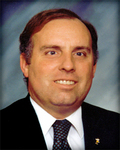
Gordon Franz is a Bible teacher who holds an MA in Biblical Studies from Columbia Biblical Seminary, SC. Since 1978, he has engaged in extensive research in archaeology and has participated in a number of excavations in and around Jerusalem, including Ketef Hinnom and Ramat Rachel; as well as the excavations at Tel Lachish, Tel Jezreel and Tel Hazor. He has taught the geography of the Bible and led field trips in Israel for the Jerusalem Center for Biblical Studies, the Institute of Holy Land Studies, and the IBEX program of Master’s College. He also co-teaches the Talbot School of Theology’s Bible Lands Program. Gordon is on the staff of the Associates for Biblical Research.
Gordon blogs at Life And Land

Funk, John Fretz (1835-1930)

John Fretz Funk: probably the outstanding leader of the Mennonite Church (MC) in the 19th century; son of Jacob Funk and Salome Fretz, was born on 6 April 1835 on the family homestead in Hilltown Township, Bucks County, Pennsylvania, where he spent the first 22 years of his life. He was a great-grandson of immigrant Bishop Heinrich Funck (d. 1760). He was married to Salome Kratz 19 January 1864. One of his two daughters, Phoebe, married A. B. Kolb. John died on 8 January 1930 and was buried in the Prairie Street (Elkhart, Indiana) cemetery.
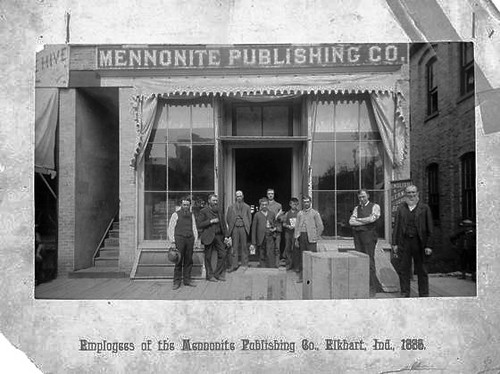
John’s only higher education, two terms at Freeland Seminary (now Ursinus College), prepared him for a career of public school teaching in his home community, but after two years in that profession, he entered the lumber business in Chicago (arriving 11 April 1857) with his brother-in-law Jacob Beidler (later in partnership with John F. Rittenhouse), in which he continued successfully for ten years. On 6 April 1867 he moved to Elkhart, Indiana, with the printing and publishing business he had established in Chicago 1 January 1864. Here he spent the rest of his long and active life.
The ten years in Chicago were decisive in Funk’s life. Here in 1858 he was converted in a Presbyterian revival, here he met and associated intimately with D. L. Moody (1861-1867), to whom he attributed much of the influence which moved him into active Christian service with progressive ideas in Sunday school, evangelism, and religious publication, far in advance of the lethargic mid-century Mennonite (MC) Church of his fathers. His decision to cast his lot with this church (he returned to Bucks County for baptism in 1860, and was ordained as a minister for the struggling Cullom, IL, congregation some 50 miles south of Chicago in May 1865) and assume aggressive leadership was an event of major significance for the North American Mennonitism far beyond the bounds of his own denomination, for besides being a pioneer Mennonite publisher, he played a major role in the immigration and colonization of the Russian Mennonites in the United States and Canada 1873-1880, and in effect became the publisher for the Manitoba Mennonites. He did not become a bishop until 6 June 1892 (rendered inactive 31 January 1902, when his active career as a church leader came to an end), but he was by all odds the most influential leader for 30 years (1870-1900), shaping the course of the Mennonite Church.
His base of operation was his publishing house, established at Elkhart as John F. Funk and Brother 1867-1875, then incorporated as the Mennonite Publishing Co., 1875-1925, with widely held stock ownership. (Unfortunately a bank failure in 1903, which cost him a personal loss of $40,000, and a fire in 1906 caused the company to become bankrupt in 1906, a blow from which he never recovered, although he continued in business selling book stocks and doing some publishing of reprints of older titles until the age of 90 in 1925.) His great influence through the church paper Herald of Truth (German edition, Herold der Wahrheit 1864-1902) was supplemented by his wide traveling and speaking, conference work, and personal influence. He gathered a group of progressive younger men around him and made Elkhart the strong center of church leadership and growth. He brought J. S. Coffman, the noted evangelist, to Elkhart as an editor in 1879; John Horsch, a writer and historian, in 1887; G. L. Bender, a mission leader, in 1890. H. A. Mumaw, the ultimate founder of the Elkhart Institute/Goshen College (1894), was attracted. In Elkhart the mission headquarters of the Mennonite Church was established (1892); here the Mennonite Aid Plan was founded (1882); from here the first foreign missionaries were sent out to India (1898) at a meeting presided over by Funk. Here the first relief agency was organized (1897). In the church which Funk founded and of which he was the pastor (1871-1902) the first young people’s meeting was established (1890?), and one of the first Sunday schools (1870). In 1872 Funk, with Daniel Brenneman, conducted the first evangelistic services (Masontown, PA, in 1872) in the Mennonite Church (MC). He wrote the first Sunday-school helps (1880), published the first Sunday-school magazine. In all these good forward steps Funk was a leading figure, if not the actual innovator, moving cautiously, often with great courage, against much opposition, using the columns of the Herald in vigorous promotion,
One of Funk’s great contributions was his creative combination of conservatism and progress. He had a deep historical sense and anchored the church in its great historic heritage. He published Menno Simons’ Complete Works in English (1871) and German (1876) early in his career and the Martyrs’ Mirror likewise in German (1870) and in English (1886), in addition to a vast amount of historical articles on the Anabaptists and Mennonites (largely by John Horsch ), and built up an excellent Mennonite historical library (the core of the Goshen College Mennonite Historical Library). He himself wrote The Mennonite Church and her accusers (Elkhart, 1878), a defense against the attacks of the Reformed Mennonite writer Musser against the Mennonite Church. He stood firmly against the Methodistic type of more emotionalized piety (Brenneman and Mennonite Brethren in Christ, 1875) and equally vigorously resisted the reactionary type (Wisler, 1871). He guided the church in gradual change down the middle of the road, and is more responsible than any other one man (teamed with J. S. Coffman) for the general character of the Mennonite Church (MC) in the 20th century in its middle-of-the-road position between tradition on the one hand and undirected progress on the other. He also played a wise and good role in preparing the reunion of the Mennonite and Amish bodies, which came to full fruition 1915-25.
Funk’s contribution as a publisher is remarkable. His major periodical publications include Herald of Truth (1864 until its merger with Gospel Witness to form the Gospel Herald in 1908), Mennonitische Rundschau (1878-1908), Mennonite Sunday School quarterly (1890-1908, several levels). He published in repeated editions the prayer books, hymnbooks, catechisms, and confessions which became the household books of Mennonites (including the Russian Mennonites and the Amish) in the second half of the 19th century.
Funk’s role in the great Russian immigration was outstanding. Peter Jansen wrote, “My Father, Cornelius Jansen, always said you were more responsible than any other man.” His home in Elkhart was the first stopping place, not only of the 12 delegates from Russia in 1873, but of hundreds of immigrants in 1874ff., who stayed at his home or were quartered in the Prairie Street Mennonite Church. He was the channel of contact with U.S. senators and the great railroads. He personally conducted the delegates on their tours to Minnesota, Dakota, Nebraska, and Kansas. He helped to organize the great U.S.-based aid agency, Mennonite Board of Guardians, of which he served as treasurer for many years. He negotiated reduced rates for transportation by steamship companies and railroads, and raised both loan funds .and relief donations for the needy settlers in their first hard pioneer years. His name was a household word among the Mennonites of Manitoba, who had read his Rundschau for two generations, and for whom he published their confession, catechism, and hymnbooks for 50 years.
Fortunately Funk’s great work was done by 1902, when through unwise methods of working as a bishop, and through mismanagement of his publisher-church relations he was forced into an unworthy retirement at the age of 67 (1902-1908). Fortunately also his publishing work was salvaged by the organization of a Mennonite Church (MC)-owned Publication Board (1908) and Publishing House; the school which he had first encouraged (then opposed), Goshen College, stepped into the place of progressive leadership, and the Mennonite Church General Conference (MC) (unifying the regional Mennonite Church conferences, including the Ontario conference) which he long and vigorously advocated (though later failed to support) became the unifying factor in his church.

Mark Frees
I am not sure if this is the right Mark Frees, but it is the only one I could find online. All I know is Makr Frees, that I have writings by, was part of the Brethren, but that is all I know about him.

Mark Allen Frees, 62, left his earthly temple and sprinted to the arms of his Savior on May 21st, 2022. A faithful servant of the Lord, his devotion to his family was surpassed only by his devotion to his Heavenly Father. He exuded a love for the Word of God that he passed to his ten children and to many others through his example and his skillful Bible teaching. Though he consistently underestimated his own work, Mark was an avid and gifted writer, authoring many books, articles, and poems. Some of his works were widely published, but his primary efforts were for the help and enjoyment of his family.

 Down to Earth But Heavenly Minded